VW Scirocco 2.0 TDI CR Servicing, Diagnostics and Repairs for the CUWA Engine
The Scirocco was always the Volkswagen that wanted to be taken seriously as a driver's car, and the 2.0 TDI CR 184hp version makes a compelling case. Under the bonnet sits the CUWA unit from the EA288 family, a 1968cc common rail diesel producing 184hp and 380Nm from the factory. Those are numbers that feel genuinely quick in a car this size, and the engine's compact bore and long stroke give it a pulling character that never gets old on a motorway on ramp. Think of it as the coupe that quietly embarrasses hatchbacks at the lights, then sips diesel all the way home. But a willing engine still needs the right care, and this one has a handful of known weak points worth understanding before something goes wrong and turns that fun into frustration.
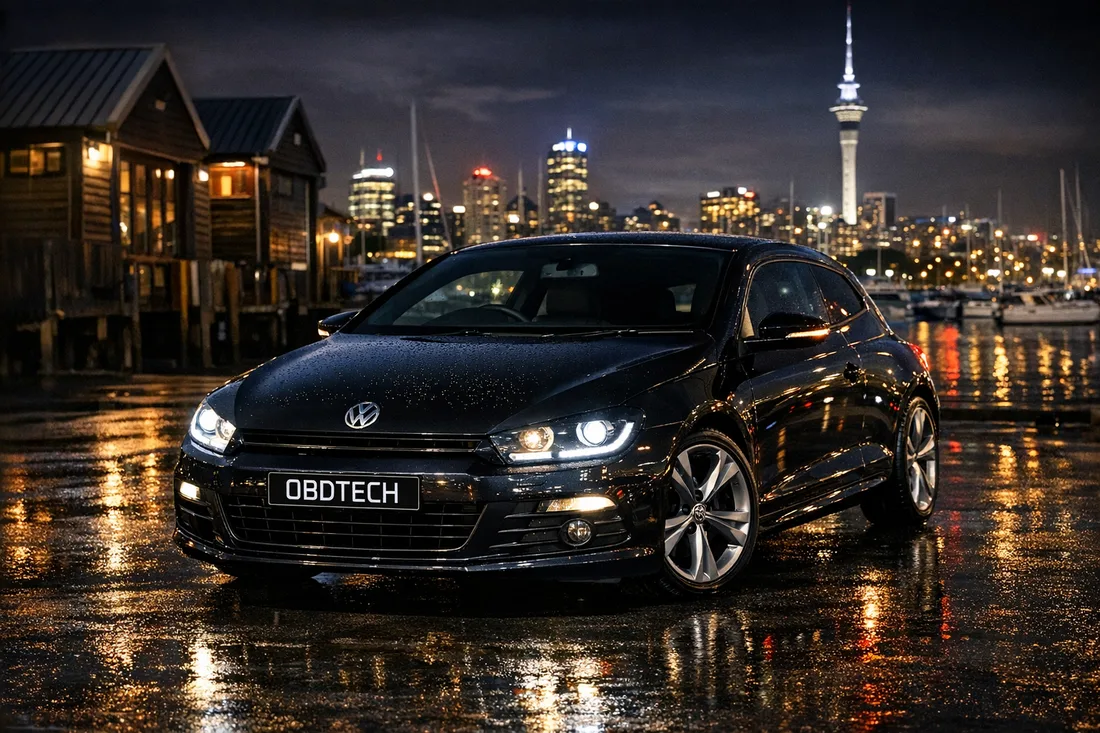
What Makes the CUWA Tick and Where It Can Trip You Up
The CUWA runs a 16.5:1 compression ratio through an 81.0 x 95.5mm bore and stroke combination, with a Bosch EDC17C64 ECU managing fuelling and timing. It is a sophisticated, high pressure common rail setup that rewards clean fuel, fresh oil, and regular attention. When it gets that, it is strong and reliable. When it is neglected, the same precision engineering that makes it quick becomes the reason things get expensive.
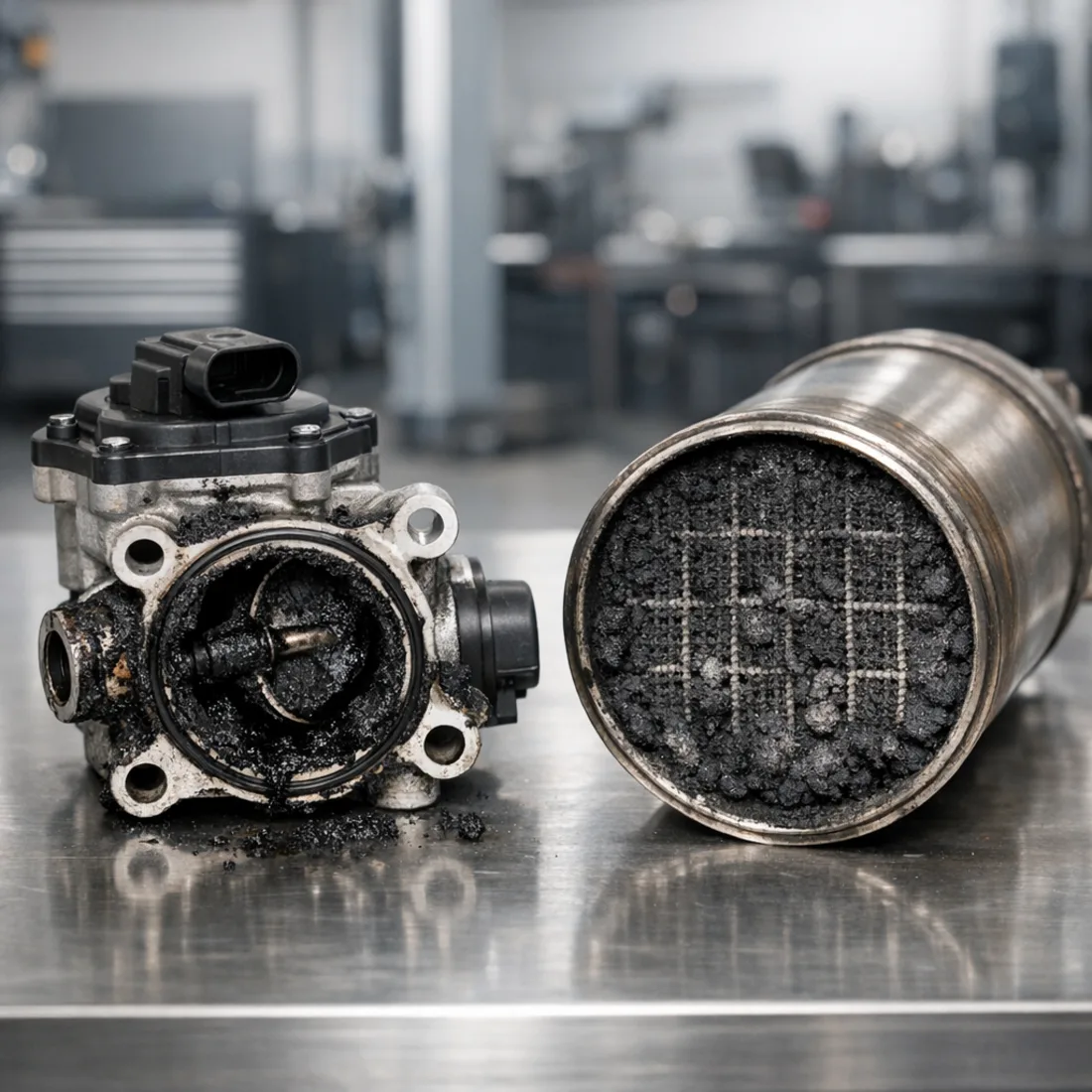
The EGR valve and EGR cooler are the first place we look on a higher mileage CUWA. These units are fitted with a relatively small EGR circuit that recirculates exhaust gases back into the intake to reduce nitrogen oxide emissions. Carbon builds up in the valve and cooler passages over time, and once the flow is restricted enough, the ECU sees the discrepancy between commanded and actual flow and logs a fault. The usual symptom is rough idle, increased smoke on hard acceleration, or the engine dropping into a reduced power mode that many people describe as the car feeling suddenly flat. Left long enough, a stuck open EGR valve can flood the intake with unmetered exhaust gas and make cold starting genuinely difficult. We clean or replace the valve and cooler as a unit where the build up is severe, and we clear the faults correctly afterward so the system learns properly.
-
EGR valve and cooler carbon clogging causing rough idle, increased smoke, or reduced power mode
-
DPF loading on short trip urban driving leading to amber warning, limp mode, and regeneration failure
-
Intake manifold flap wear at pivot points causing rattle, limp mode, or in worst cases ingestion of broken plastic into the engine
-
Injector calibration drift at higher mileage causing rough idle, rattly cold starts, and creeping fuel consumption
-
Dual mass flywheel and clutch wear under the 380Nm torque load, signalled by shudder or judder when pulling away at low revs
-
Timing belt drive requiring scheduled replacement with tensioner, idler, and water pump as a complete kit to avoid catastrophic belt failure
The coupe that quietly embarrasses hatchbacks at the lights, then sips diesel all the way home.
The CUWA is strong and reliable when it gets clean fuel, fresh oil, and regular attention.
The diesel particulate filter on a facelift Scirocco TDI is sized for a car that spends at least some of its life on longer runs. If the car is used mostly for short distance urban driving, the DPF never reaches the exhaust temperature needed to burn off accumulated soot, and passive regeneration simply does not happen. The ECU will attempt active regeneration by injecting extra fuel late in the combustion cycle, but if that regeneration cycle keeps getting cut short by the ignition being switched off, the filter loads up. The amber DPF warning on the instrument cluster is the early alert. Ignore it long enough and the light stays on permanently, limp mode follows, and the cost of fixing it rises sharply. We carry out forced regeneration cycles through ODIS, check back pressure differential data, and clean or replace the filter depending on what the data tells us.
The intake manifold flaps on this engine are plastic actuated components that modulate airflow for emissions and driveability. They wear at the pivot points and can rattle, break, or simply stop responding to the ECU's commands. When the ECU detects the fault, the response is immediate: limp mode, usually a yellow engine management light, and a car that feels like it is pulling through treacle. In the worst cases a broken flap fragment can be ingested into the engine, which is a far more expensive conversation. We inspect the intake manifold assembly and replace the flap unit when wear is found, not just clear the code and hope.
High mileage CUWA injectors are worth a proper check. Common rail injectors operate under extreme pressure and tiny wear tolerances, and when they start to drift out of calibration the ECU compensates up to a point, then logs injector balance faults. Symptoms range from rough idle and a rattly cold start to increased fuel consumption that sneaks up gradually. We read injector actual quantity values and correction data through ODIS live data to see exactly which cylinder is misbehaving before we make any decisions about replacement.
The dual mass flywheel and clutch are worth a mention specifically because of the torque this engine makes. 380Nm through a relatively sporty coupe means the DMF is working hard, especially if the car has ever been driven enthusiastically or has sat in city traffic. The classic sign of a failing DMF is a pronounced shudder or rattling sensation when pulling away from rest, or a juddering feeling when the clutch is released at low revs. Once the DMF starts to fail it tends to accelerate, so catching it early is genuinely cheaper than waiting until the clutch disc is also damaged.
The timing belt drive on the CUWA needs to be replaced on schedule along with the water pump. This is not the kind of job where you run it until it shows symptoms, because the consequence of a belt failure at operating speed is catastrophic internal damage. We track the interval carefully and replace the belt, tensioner, idler, and water pump as a complete kit so nothing is left behind that could cause a problem before the next service. Full mechanical repairs including timing belt kits are handled at our Penrose workshop.
Get your Scirocco booked in with a proper specialist.
Regular Servicing: What the CUWA Actually Needs
The CUWA engine requires a full synthetic oil that meets or exceeds the VW 507.00 low SAPS specification. This matters more than people realise on a DPF equipped diesel, because conventional or incorrect oil ash content shortens DPF life noticeably. Using the right oil is not a premium option, it is part of keeping the exhaust system working as intended. We pair that with a fresh oil filter at every service, and we include the air filter, fuel filter, cabin filter, and wiper blades as part of a proper service rather than ticking a single box and walking away.
Drive belts, glow plugs, brake pads, and rotors all get checked and renewed on a condition and interval basis. Glow plugs on this engine matter most in the first few seconds of a cold start: a weak or dead plug on one cylinder means harder starting, more smoke, and extra wear during warm up. Brake wear is worth watching because a car with this much torque tends to work its front brakes harder than drivers expect. We check pad and rotor condition at every visit and advise clearly when renewal is due. For full details on what a brake inspection covers, see our brake repair and replacement service.
On the diesel side we handle DPF forced regeneration, DPF cleaning, EGR valve and cooler service, and AdBlue system checks where the car is fitted with one. We also carry out clutch and dual mass flywheel replacement, suspension component inspection, and any electrical or sensor work the car needs. Everything that goes back on the car is a genuine, brand new OEM or OEM grade part. Our full car servicing programme covers all of this in a single booking.
How We Diagnose It: No Guessing, No Generic Tools
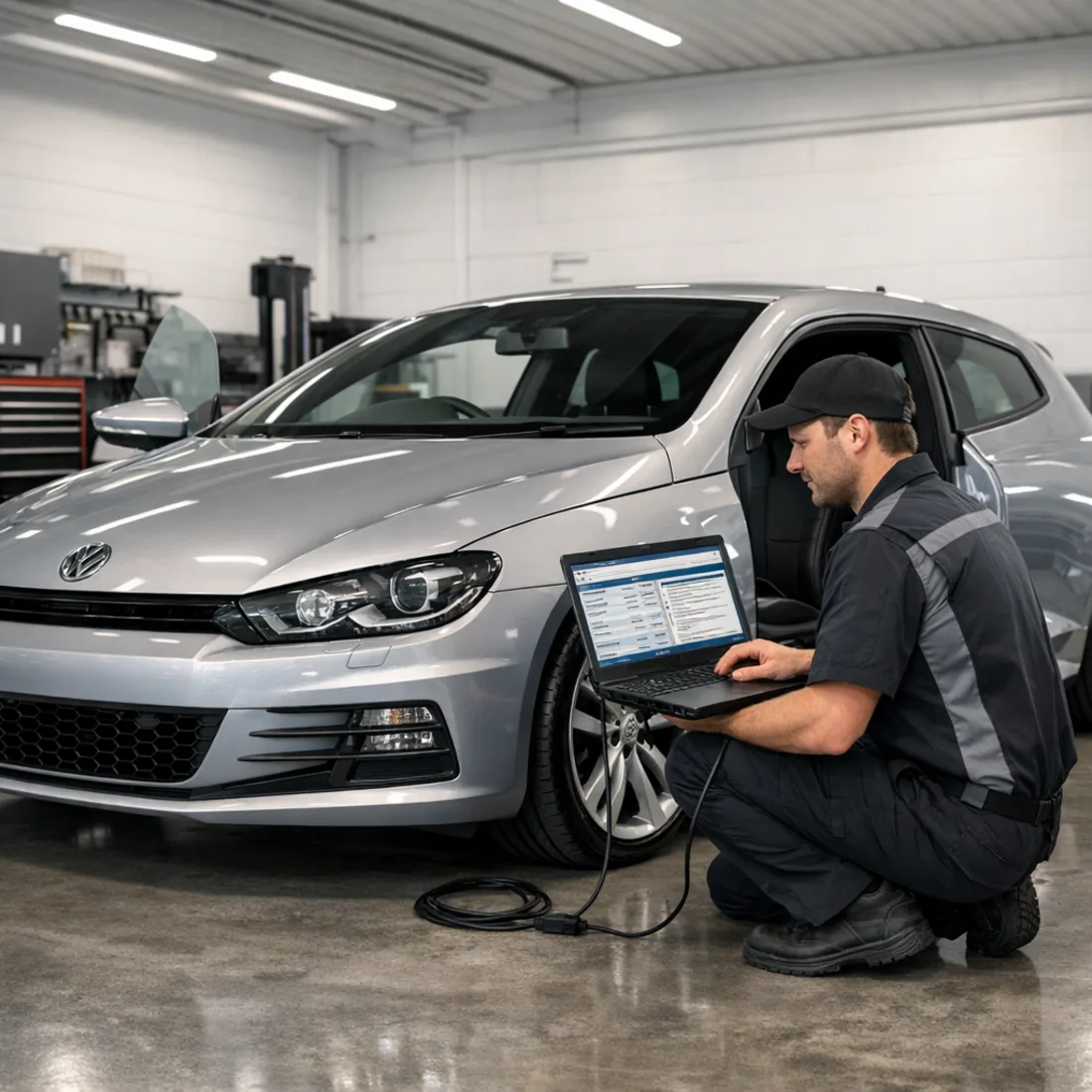
We use ODIS, the Volkswagen factory diagnostic platform, not a generic scan tool. That distinction matters in practice. ODIS reads the full module network across every control unit in the car, not just the powertrain. It gives us access to guided test plans for the CUWA's specific fault patterns, lets us command live actuations to test the EGR valve and intake flaps in real time, and provides the correct adaptation and coding functions after any repair. When we replace a component and need to write the correct values back to the ECU or run a post repair function, ODIS does that properly. A generic reader cannot.
It also means we can correlate faults across modules, so when an apparent engine fault is actually triggered by a sensor signal elsewhere in the system, we find it quickly rather than replacing parts on guesswork. Live data logging for injector corrections, EGR flow, DPF differential pressure and more is all available through ODIS. Correct post repair adaptation and coding is especially important after ECU or injector work, and we handle that as standard. Our auto electrical team supports the diagnostics process end to end.
Stage 1 Tune: More from What Is Already There
The Bosch EDC17C64 ECU on the CUWA responds very well to a calibrated Stage 1 remap. Our tune lifts output from the stock 184hp and 380Nm to 225hp and 460Nm, a gain of 41hp and 80Nm without any hardware changes. The fuelling and boost maps are recalibrated within the tolerances the hardware can reliably support, so the engine stays healthy and the power delivery is smooth rather than spikey. It transforms the feel of the car on an open road, and the improved torque curve makes overtaking noticeably more relaxed.
The Bosch EDC17C64 ECU is remapped within the hardware's reliable tolerances for smooth, consistent power delivery. No hardware changes are required. Additional calibration options include pop and bang crackle mapping, start/stop disable, speed limiter adjustment, and EGR and DPF related calibration options. Note that any modification affecting emissions compliance, including DPF off calibration, is intended for off road or track use and may affect WOF compliance on a road registered vehicle.
For everything related to tuning and what the CUWA can genuinely achieve, see our performance tuning page. If you want to explore specific output targets and what they involve mechanically, our power gains guide is a good starting point.
Frequently Asked Questions
The questions we get most. Something else on your mind? Get in touch.