Volkswagen Touareg: Service, Repairs and Tuning Across the Whole Family
The Touareg has always been Volkswagen's most serious SUV, a vehicle that arrived in 2002 carrying engines most manufacturers would never dare bolt into anything with a back seat. From the twin turbocharged V10 diesel of the first generation to the 48V mild hybrid V8 TDI of the third, every Touareg has demanded more from its workshop than a generic scan tool and a quick oil change can deliver. The fault patterns shift across generations, some problems were fixed, others carried forward in new forms, and a handful are unique to one engine family alone. Whether you've got a first gen diesel or the latest CR platform petrol V6, this is the full story.
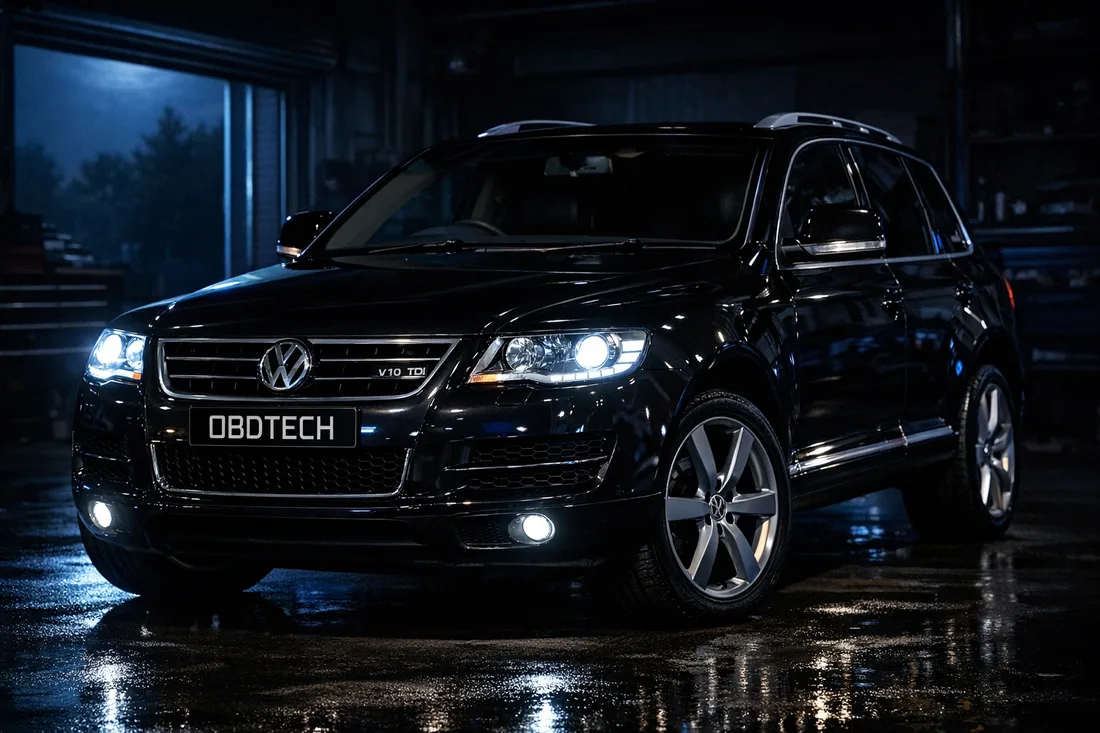
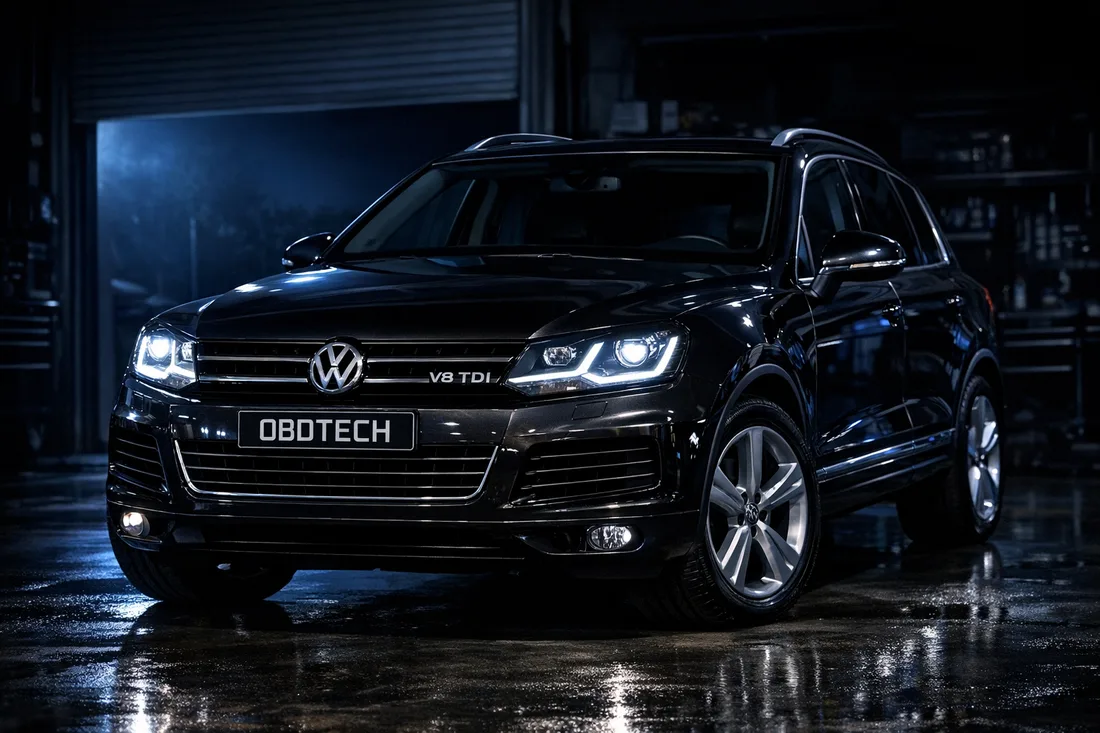
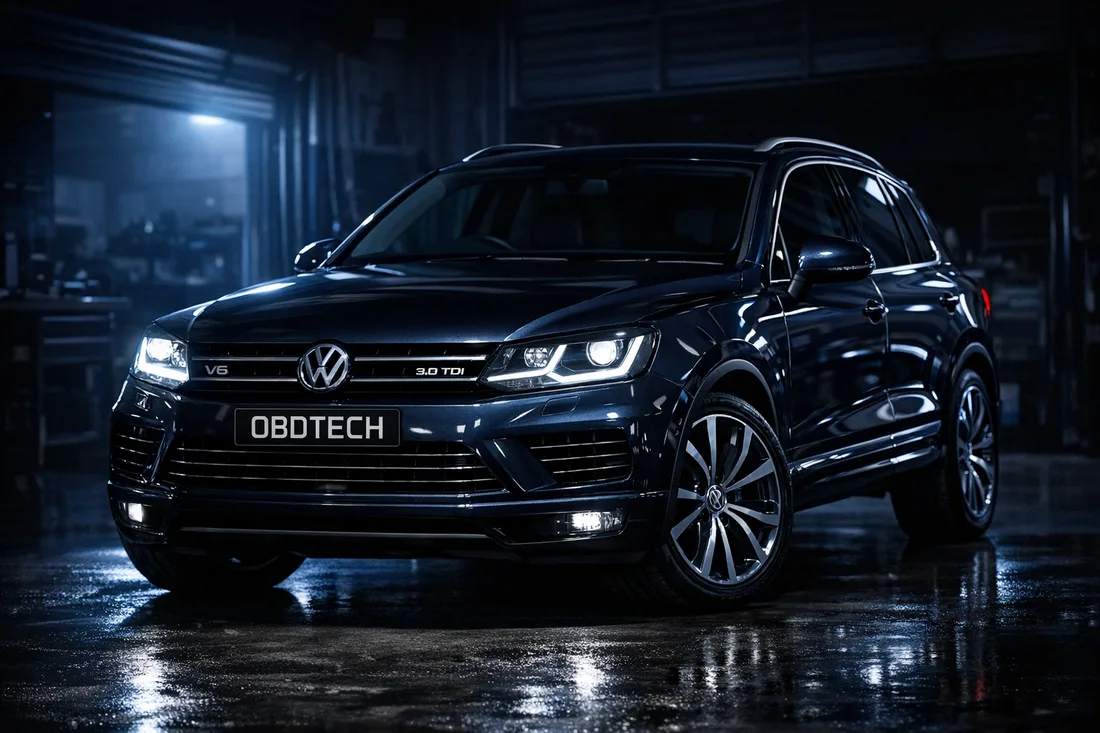
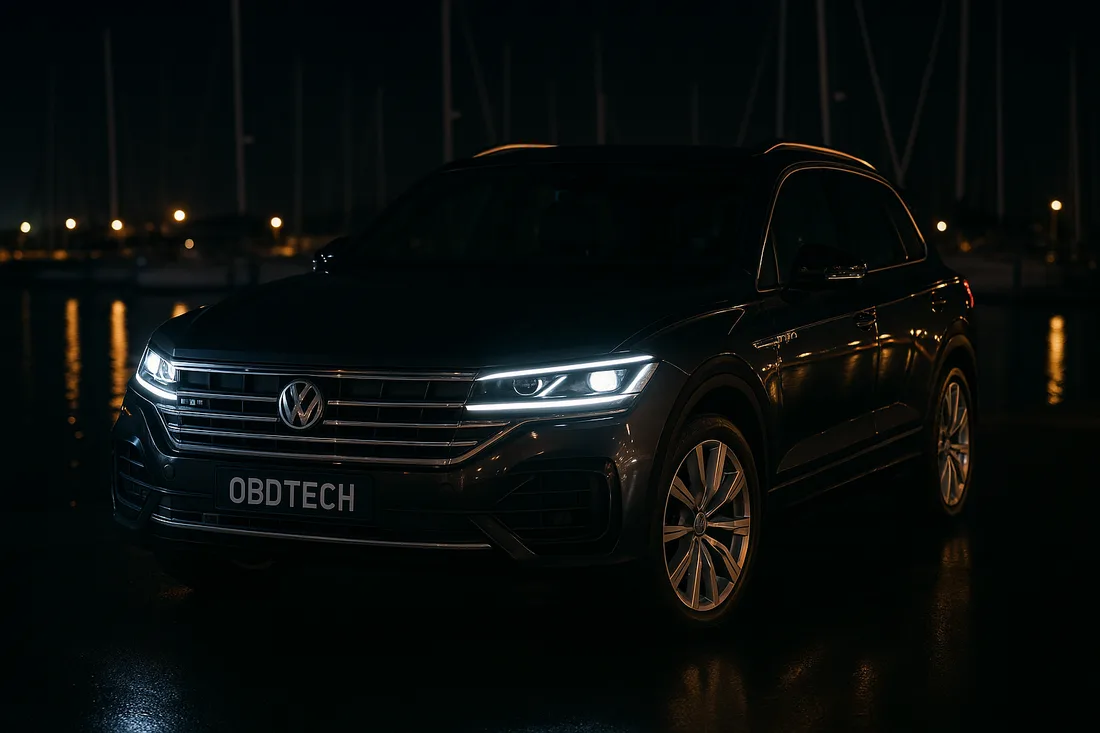
Touareg 3.0 TDI (BUN, 211hp): Where It All Started
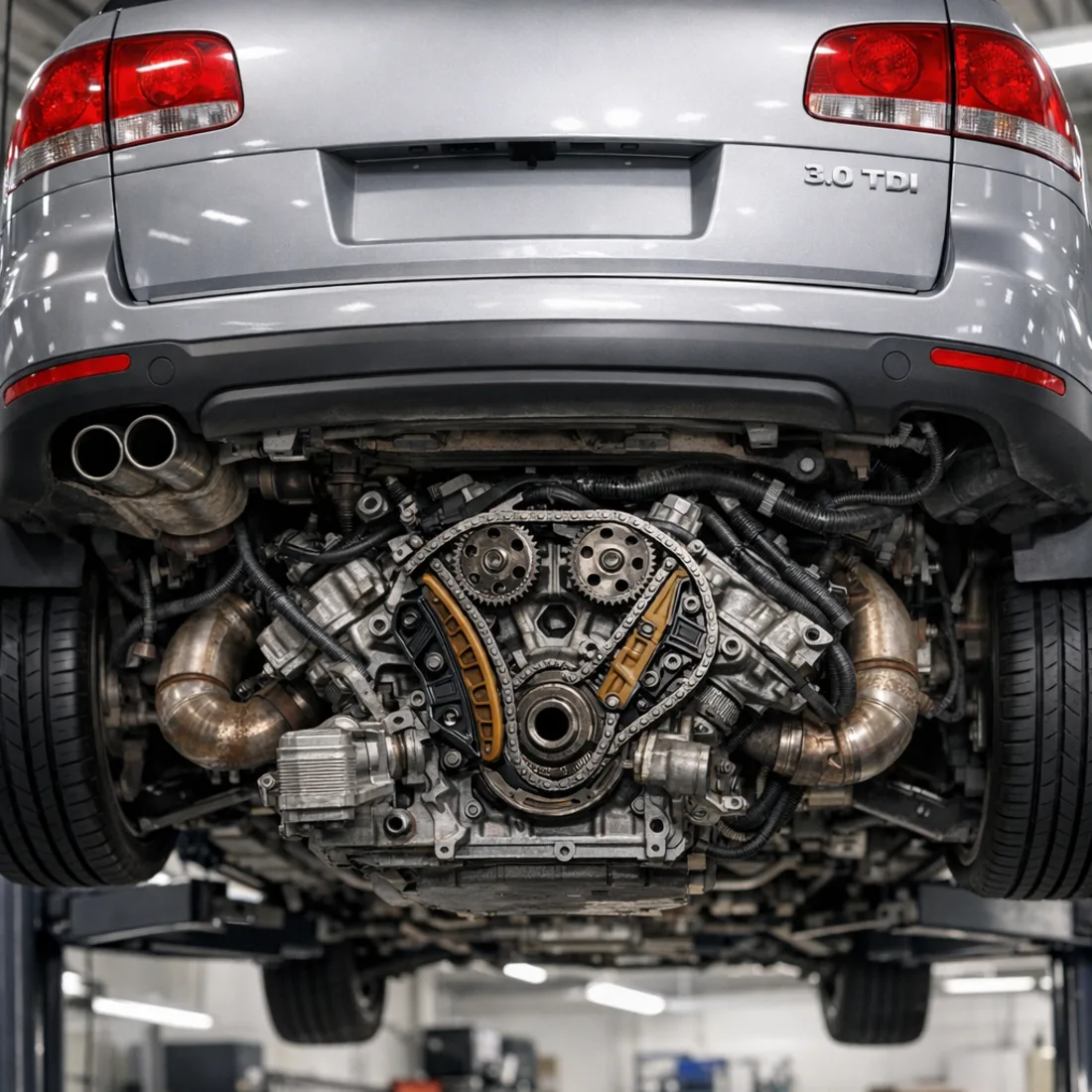
The original Touareg 3.0 TDI with the BUN engine is a 2967cc V6 diesel with an 83.0mm bore, 91.4mm stroke and a 17.0:1 compression ratio, producing 211hp and 500Nm through permanent four wheel drive. On paper it sounds composed and sensible. In practice, it is a vehicle that packs a lot of engineering into a tight space, and when the servicing slips, it finds ways to remind you of that expensively.
The BUN's most talked about weakness is the timing chain and tensioner setup, which sits at the rear of the engine. Getting to it is a big job, and the early signs are easy to miss. A cold start rattle that settles after a few seconds is the tell. Do not ignore it. By the time the rattle is loud and persistent, the window for a straightforward fix has often closed.
-
Timing chain and tensioner wear, rear of engine access makes it a significant job
-
Oil cooler and seals weeping, often detected as oil in coolant or external seepage
-
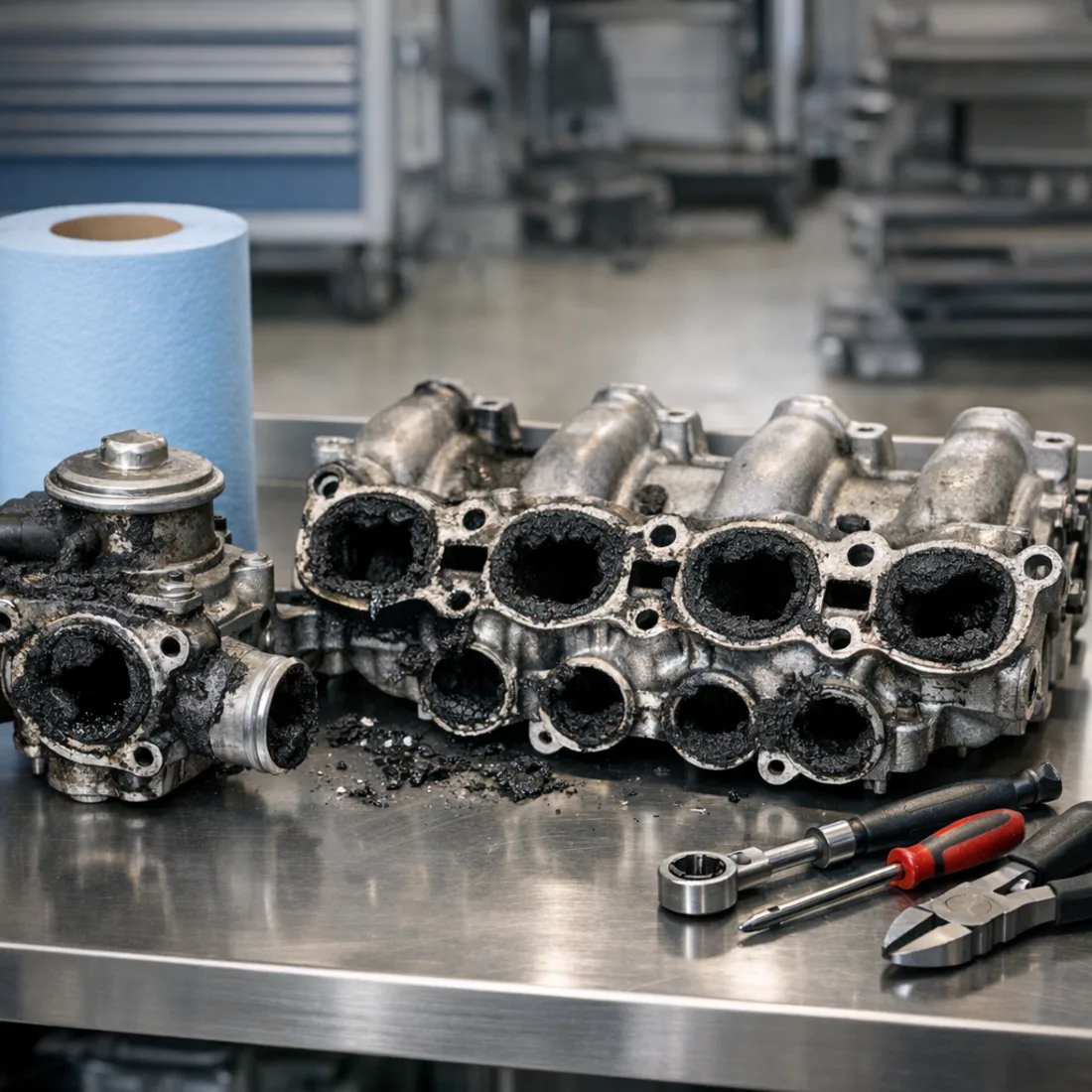
EGR valve clogging and heavy intake carbon build up
-
High pressure fuel system wear causing rough running and hard starts
-
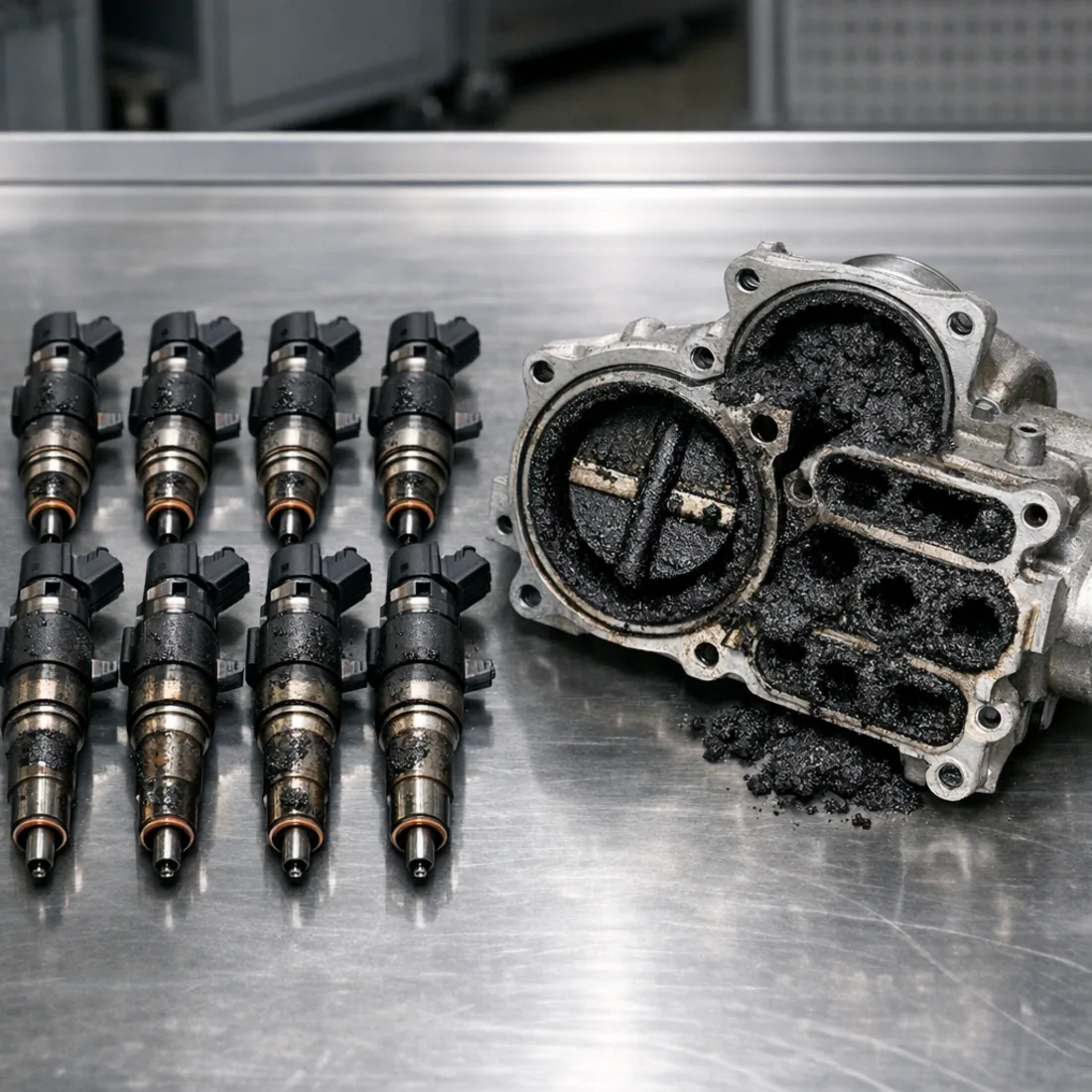
Injector deterioration as mileage climbs
-
DPF loading on cars used mostly for short trips
-
Air suspension faults where that option is fitted
A cold start rattle that settles after a few seconds is the tell. Do not ignore it.
By the time the rattle is loud and persistent, the window for a straightforward fix has often closed.
The ECU on this car is either a Bosch EDC16CP34 or a Bosch EDC17CP14 depending on the build date, and diagnosing it properly means using the ODIS factory platform, not a generic reader. ODIS gives us live data across all modules, guided fault finding and the ability to read the full fault memory the way Volkswagen intended. That matters on a car this complex.
A full service on the BUN Touareg covers the correct low ash long life diesel grade oil and filter, air filter, fuel filter, cabin filter, glow plugs, drive belts, brake pads and rotors. EGR and intake cleaning, DPF condition and suspension bush wear are all things we look at proactively on these because catching them early is always cheaper than dealing with the aftermath. Stage 1 tuning on the BUN takes it to 280hp and 575Nm, a meaningful step that makes the torque delivery noticeably smoother across the rev range.
Get your Touareg booked in with a specialist who has the factory tooling to do it properly.
Touareg 5.0 TDI V10 (BWF, 313hp): The One That Changes the Conversation
If the 3.0 TDI is complex, the V10 is something else entirely. The BWF is a 4921cc ten cylinder diesel, 81.0mm bore, 95.5mm stroke, 18.5:1 compression, and it makes 313hp with 750Nm of torque. Volkswagen built it because they could, and because the market in the early 2000s rewarded engineering ambition. It is a magnificent engine when it is right, and a spectacularly expensive one when it is not.
The V10 is acutely sensitive to oil quality and service intervals. Use the wrong grade or stretch the interval and you accelerate wear on the injector and timing components faster than the rest of the platform. This engine ran a Bosch EDC16U2.1 M and S ECU, and like all first gen Touaregs it needs ODIS for proper diagnosis, injector coding and guided functions. A generic scan tool will read some codes but misses the detail that matters on a car this involved.
-
Twin turbochargers, both of them, and the associated pipework
-
Unit injector (PD) system wiring and injector failure
-
Tandem fuel pump wear
-
EGR system and vacuum line deterioration
-
Cooling system stress from the sheer thermal load of ten cylinders
-
Glow plugs, which are a bigger job on a V10 than on a V6
Stage 1 tuning on the V10 BWF goes to 370hp and 900Nm. That 150Nm torque gain is substantial.
It makes the V10's already effortless character even more relaxed at highway speeds. It is the kind of tune that makes a long tow feel genuinely easy.
Where the BUN 3.0 TDI tends to show timing chain and EGR problems, the V10 concentrates its issues around the turbo system and the PD injection hardware. Both engines share the air suspension concerns on cars so equipped, and both reward proactive servicing over reactive repair.
Stage 1 tuning on the V10 BWF goes to 370hp and 900Nm. That 150Nm torque gain is substantial and makes the V10's already effortless character even more relaxed at highway speeds. It is the kind of tune that makes a long tow feel genuinely easy.
Touareg 4.2 V8 TDI (AXQ, 340hp): Eight Cylinders, 800Nm, and Real Complexity
The AXQ is a 4134cc V8 diesel, 83.0mm bore, 95.5mm stroke, 16.0:1 compression, producing 340hp and 800Nm. It sits between the 3.0 V6 and the V10 in the first generation lineup, and in many ways it represents the sweet spot of that generation. More torque and grunt than the V6, more manageable in terms of running costs than the V10, and genuinely capable of towing or cruising with real authority. Its ECU is a Bosch EDC17CP44, which it shares with some second generation variants.
Where the BUN timing chain demands attention from the rear of the engine, the AXQ has its own geometry to respect, and getting into this engine bay for anything beyond a basic service requires proper workshop space and lifting gear. We see the V8 TDI come in most often for EGR and injector work, and for DPF issues on cars that have been driven on short cycles without proper motorway runs to regenerate. Diagnosis is done with VCDS and ODIS, which lets us read the full fault memory, code new injectors and run guided regen cycles properly.
-
Injector wear and failure at higher mileages
-
EGR valve and cooler carbon fouling
-
DPF loading and regeneration failures
-
Complex cooling system stress similar to the V10
-
Air suspension compressor and height sensor faults
Stage 1 tuning on the AXQ takes it to 400hp and 950Nm. That 150Nm torque gain transforms the already strong character of this engine.
If you want the most capable first generation Touareg that is also the most tunable, the AXQ V8 TDI is the one.
Stage 1 tuning on the AXQ takes it to 400hp and 950Nm. That 150Nm torque gain transforms the already strong character of this engine, and the additional options on this generation including pop and crackle mapping and Vmax removal give owners more flexibility than the V10 had.
If you want the most capable first generation Touareg that is also the most tunable, the AXQ V8 TDI is the one.
Touareg 3.0 TDI (CDTB, 262hp): The Refined Middle Child
The second generation Touareg (7P) arrived with a cleaner, more refined face and a significant update to the 3.0 TDI. The CDTB carries the same 2967cc displacement and 83.0mm bore as the BUN, but the stroke stays at 91.4mm while compression drops slightly to 16.8:1. Output jumps to 262hp and 580Nm, delivered through an eight speed automatic and full time all wheel drive. It is a more polished package than the first generation, better on fuel, quieter, and with a more sophisticated interior. But the complexity did not go away. It got more refined and in some ways more demanding.
The shared bore and stroke dimensions with the BUN are not coincidental. Volkswagen evolved rather than replaced the 3.0 TDI architecture, and some of the fault patterns followed along. EGR fouling and intake carbon build up remain the most common things we see on the CDTB, and boost pipe cracking has become a well known issue on the second generation that was less common on the first. The CDTB also runs a Bosch EDC17CP44 ECU, the same unit as the AXQ V8 TDI, which gives us a consistent diagnostic approach across those two engines.
-
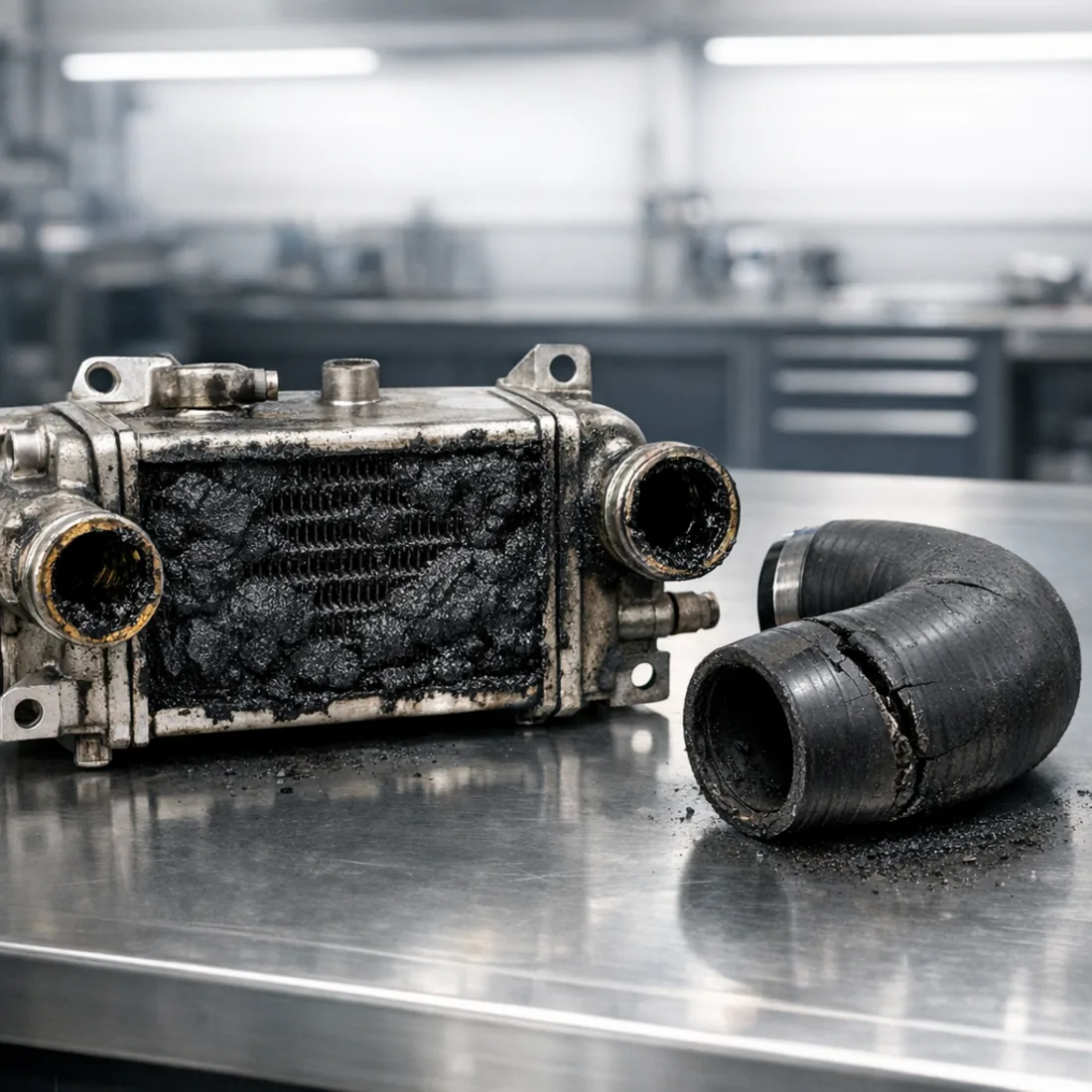
EGR cooler fouling and EGR valve sticking
-
Boost pipe cracking and intercooler connection failures
-
DPF loading from insufficient regeneration
-
Oil consumption if PCV system is neglected
-
Air suspension compressor wear and height sensor faults
The CDTB is the most common Touareg we see, and for good reason.
It is the most rounded overall package of the diesel lineup if you want something that balances refinement with usability.
The CDTB benefits from the ODIS diagnostic platform, which gives us guided fault finding and the ability to run forced DPF regeneration cycles, code replacement components and read the full fault memory across every module. A mechanical repair on the CDTB often starts with a full scan before anything is touched, because the fault memory tells a story across modules that a single fault code never could.
Stage 1 tuning on the CDTB takes it to 300hp and 650Nm. Smaller gains than the first generation V8 or V10, but the base tune is already more efficient, and the additional options including pop and crackle mapping and start stop cancellation reflect the more modern ECU architecture.
Touareg 4.0 V8 TDI (422hp): The Modern Flagship
The third generation Touareg on the CR platform raised the benchmark again. The 4.0 V8 TDI displaces 3956cc with the same 83.0mm bore that the 3.0 TDI family has always used, paired with a 91.4mm stroke and 16.0:1 compression. Output is 422hp and 900Nm. It uses a Bosch MD1CP014 ECU, a newer generation of control unit than anything in the first or second generation lineup, and the car adds a 48V mild hybrid electrical system on top of the diesel hardware. This is a genuinely different engineering proposition from what came before.
The pattern of EGR and DPF issues that ran through every previous generation diesel did not disappear on the third gen V8. If anything the emissions hardware is more involved, with the SCR AdBlue system added to the mix. What changed is the diagnostic tooling required. The MD1 ECU needs ODIS and the correct factory interface to code components, run guided functions and carry out SCR system checks properly. A generic reader simply cannot do it.
-
EGR cooler faults and DPF loading, the emissions hardware works hard on high mileage cars
-
AdBlue SCR system faults and NOx sensor issues
-
Electric supercharger and turbo actuator problems
-
48V mild hybrid wiring and calibration faults
-
Driver assist sensor faults when wiring or coding drifts
-
Air suspension compressor wear and leaks
Stage 1 tuning on the 4.0 V8 TDI takes it to 480hp and 1000Nm.
The result is an SUV that tows and overtakes with a level of effortlessness that is genuinely hard to believe until you have felt it.
We also handle AdBlue and NOx system diagnosis and repair when these components develop faults, using the factory approach to identify root cause rather than chasing symptoms.
Stage 1 tuning on the 4.0 V8 TDI takes it to 480hp and 1000Nm. From a base of 900Nm that additional 100Nm is delivered across a broader range, and the result is an SUV that tows and overtakes with a level of effortlessness that is genuinely hard to believe until you have felt it.
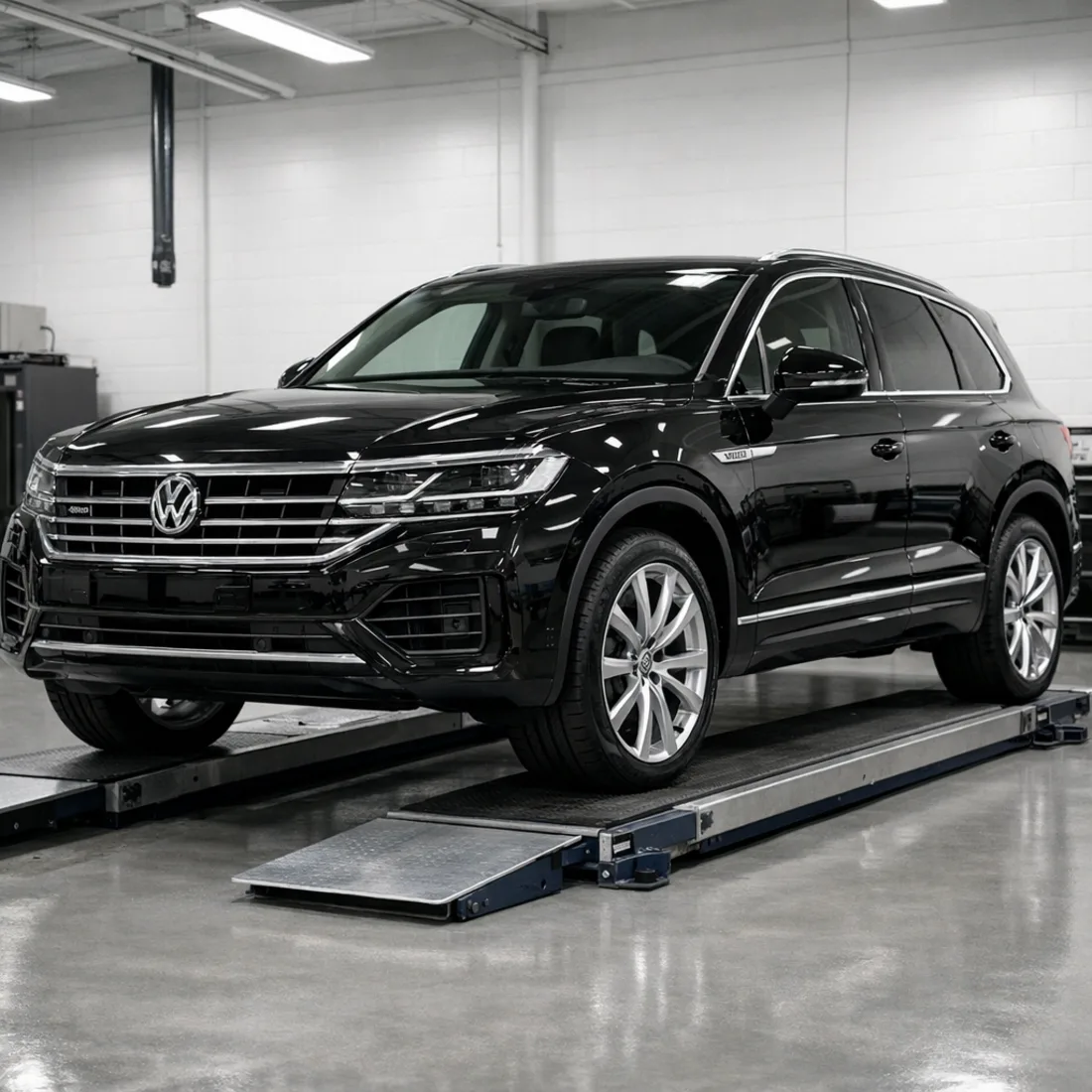
Touareg 3.0 V6 TSI (340hp): The Petrol Option That Earns Respect
Not every Touareg owner wants a diesel. The third generation CR platform also came with a supercharged EA839 3.0 V6 petrol producing 340hp. It is refined, quick, and genuinely smooth in a way that no diesel Touareg can quite replicate. It also has a different set of fault patterns than everything that came before it, and that is worth understanding if you are comparing it against the V8 TDI.
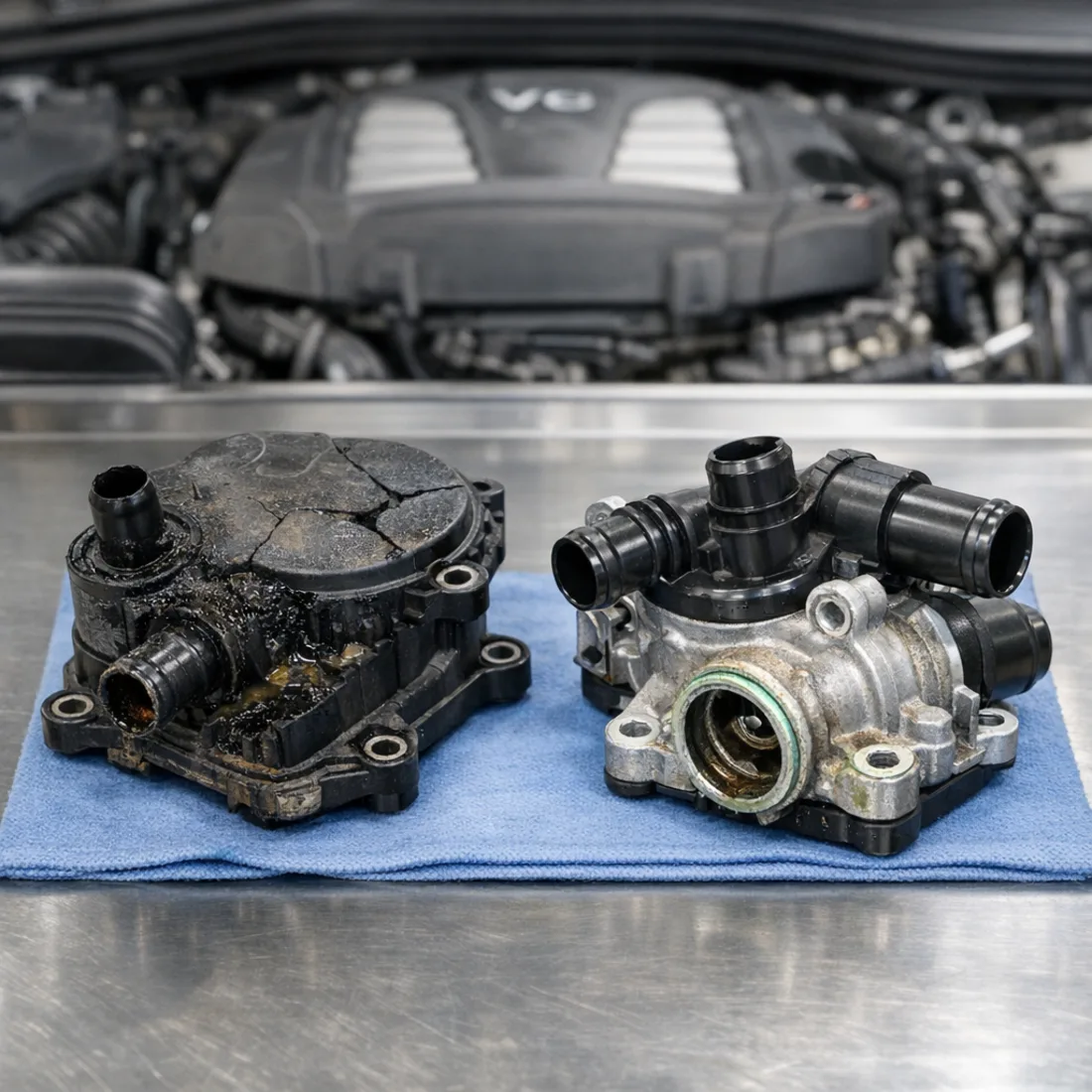
The intake valve carbon issue is the one that catches petrol direct injection owners off guard. Without port injection to wash the valves, carbon deposits accumulate on the back of the intake valves over time, and the result is rough idle, misfires under load and a gradual loss of response. An intake decarbon service addresses it, and it is something worth scheduling proactively on higher mileage cars rather than waiting for symptoms.
-
Intake valve carbon build up from direct injection without port wash
-
Water pump and thermostat module failures
-
PCV and oil separator issues causing oil consumption over time
-
Timing chain wear if oil grade or interval discipline slips
-
Air suspension compressor wear and height sensor drift
-
Driver assist sensor calibration faults
Unlike the diesel variants, there are no DPF or AdBlue concerns to manage.
The intake carbon and water pump concerns are manageable if you service it properly.
The water pump on this engine family is also worth watching. When it fails it tends to do so with little warning, and the coolant loss can be rapid. We catch many of these early through a proper coolant system inspection as part of a full service.
Spark plugs, drive belts, cabin and air filters, and correct VW spec oil grade are all routine items here. Unlike the diesel variants, there are no DPF or AdBlue concerns to manage. Stage 1 tuning on the V6 TSI lifts output meaningfully from the stock 340hp, delivering more usable torque across the mid range where big SUVs spend most of their time.
Picking Between Them Used: Where the Sweet Spots Are
If you are shopping for a used Touareg and you have a budget in mind, here is the honest version of how these generations stack up against each other. Across all generations, the single biggest indicator of a good used Touareg is a genuine full service history with the correct oil grades recorded. These vehicles do not forgive corners cut on oil quality or extended intervals. A car with patchy history in any generation is a risk worth pricing accordingly.
You want an entry point into the Touareg family and are comfortable budgeting for a timing chain inspection. Get a pre purchase check that specifically listens for cold start chain rattle and checks oil condition before you commit.
You want a collector's piece as much as a daily driver and you budget properly for maintenance. Running costs are higher than any other variant, and finding a workshop that genuinely knows this engine is the first challenge.
You want the sweet spot of the 7L platform. More torque than the V6, more manageable than the V10, and with decent used supply. Check injector condition and EGR history carefully.
You want the most rounded overall package of the diesel lineup. It balances refinement with usability and is not trying to be the most powerful thing on the road. It is the most common Touareg we see, and for good reason.
You want the modern, flagship diesel experience. Budget appropriately for servicing, be aware of the AdBlue system, and use a workshop with ODIS capability.
You want to step away from diesel complexity entirely. No DPF, no AdBlue, just a very capable supercharged petrol. The intake carbon and water pump concerns are manageable if you service it properly.
- Check for full service history with correct oil grades recorded across all generations
- Listen for cold start timing chain rattle on first gen BUN and AXQ cars
- Inspect EGR and DPF history on all diesel variants
- Check air suspension compressor and height sensor condition across all three generations
- Verify AdBlue SCR system health on third gen V8 TDI
- Inspect boost pipes on second gen CDTB for cracking
- On the V6 TSI petrol, ask about intake valve decarbon and water pump service history
Servicing the Touareg Family: What Changes and What Stays the Same
Every Touareg regardless of generation needs oil and filter changes with the correct grade for that engine. On the diesel variants that means a low ash long life diesel specification. On the V6 TSI petrol it means a VW approved petrol engine spec. Using the wrong grade accelerates timing chain wear on the chain driven engines and causes DPF damage on the diesels. It is the single most common contributing factor we see in premature wear across this whole model family.
Beyond oil, the items common to every generation include air filter, cabin filter, fuel filter (diesel variants), drive belts, brake pads and rotors, and suspension components including the air suspension compressor and height sensors where fitted. The air suspension is present on a large proportion of all three generations, and it ages. Compressors wear, bags crack, and height sensors drift. Catching these early is far cheaper than dealing with a fully failed system.
Where the generations differ is in the emissions hardware. The first generation 3.0 TDI and V8 TDI have EGR and DPF concerns. The second generation CDTB adds boost pipe vulnerability. The third generation V8 TDI adds the AdBlue SCR system and 48V electrical complexity. The petrol V6 TSI on the third gen swaps all of that for intake carbon and water pump management. Knowing which generation you have tells you which proactive service items to prioritise.
For gearbox servicing, the Touareg family uses automatic transmissions that benefit from regular fluid changes, particularly on higher mileage first and second generation cars where transmission fluid is often overlooked because there is no reminder light for it. We inspect gearbox condition and advise on fluid service as part of our full vehicle checks on all generations.
How We Diagnose Every Touareg Generation
The diagnostic tooling requirement shifts across generations, and this is one of the key reasons we see Touaregs come to us after other workshops have been unable to resolve faults. A generic OBD reader reads engine codes on most cars, but on a Touareg it misses the gearbox module, the air suspension controller, the instrument cluster, the AdBlue system on the third gen V8, and every other module that is not the engine. On a car this complex, those are exactly the modules that matter.
First generation BUN 3.0 TDI uses a Bosch EDC16CP34 or EDC17CP14, diagnosed with ODIS for guided fault finding and full module access. First generation BWF V10 uses a Bosch EDC16U2.1 M and S, with ODIS for injector coding and full memory scan. First generation AXQ V8 TDI uses a Bosch EDC17CP44, with VCDS and ODIS both used for injector coding and EGR guided functions. Second generation CDTB 3.0 TDI also uses Bosch EDC17CP44, with ODIS for forced DPF regen, boost system checks and full module read. Third generation 4.0 V8 TDI uses Bosch MD1CP014, with ODIS required for SCR system, 48V electrical and driver assist calibration. Third generation V6 TSI uses ODIS for all module access, guided functions and coding of replacement components.
The factory ODIS platform lets us do what generic tools cannot: run guided regen cycles on DPFs, code replacement injectors, read live data across the drivetrain, and carry out programming and coding properly when components are replaced. That capability matters when the repair involves more than a simple swap of a part.
Tuning the Touareg Family: Honest Numbers Across the Generations
Every Touareg in this family responds to Stage 1 tuning, and the gains are meaningful across the board. On the diesel variants the torque gains are what you feel most in day to day driving. Towing, overtaking, and motorway cruising all become more effortless. The ECU options available also expand with the newer generations: pop and crackle mapping and start stop cancellation are available on the AXQ, CDTB and older CR platform cars. All tuning is done on a calibrated rolling road with before and after verification, not a generic file flashed and handed back without testing.
A meaningful step that makes the torque delivery noticeably smoother across the rev range. EGR OFF, DPF OFF, DTC Removal, FLAPS, Vmax and Adblue options also available.
That 150Nm torque gain is substantial and makes the V10's already effortless character even more relaxed at highway speeds. It is the kind of tune that makes a long tow feel genuinely easy.
Pop and crackle mapping and Vmax removal are available on this generation alongside the ECU tune, giving owners more flexibility than the V10 had.
Smaller gains than the first generation V8 or V10, but the base tune is already more efficient, and pop and crackle mapping and start stop cancellation reflect the more modern ECU architecture.
That additional 100Nm is delivered across a broader range, and the result is an SUV that tows and overtakes with a level of effortlessness that is genuinely hard to believe until you have felt it.
Stage 1 tuning on the V6 TSI lifts output meaningfully from the stock 340hp, delivering more usable torque across the mid range where big SUVs spend most of their time.
A properly calibrated Stage 1 tune on a well serviced Touareg with no underlying faults is not a reliability risk. The gains are within the mechanical headroom the engine was designed with. We always carry out a full health check before any tune and will not tune a car that has unresolved mechanical issues. Ask us about a remote file service if you want to discuss tuning options for your Touareg.
Frequently Asked Questions
The questions we get most. Something else on your mind? Get in touch.