Volkswagen Golf TDI: Three Generations, One Workshop That Knows All of Them
The Golf TDI story is a long one and a good one. From the Mk5's stripped back pump duse workhorse to the diesel hot hatch brilliance of the GTD, and on to the layered, tech heavy Golf 8, each generation shares the same basic philosophy: squeeze real world performance and economy out of a diesel four cylinder. What changed between them is how complex they got, and complexity means more to go wrong if the wrong hands are on it. Our workshop in Penrose has worked on all three, and this page tells you exactly what each one does, what it struggles with, and how to keep it honest.
Golf Mk5 1.9 TDI: The Pump Duse Classic
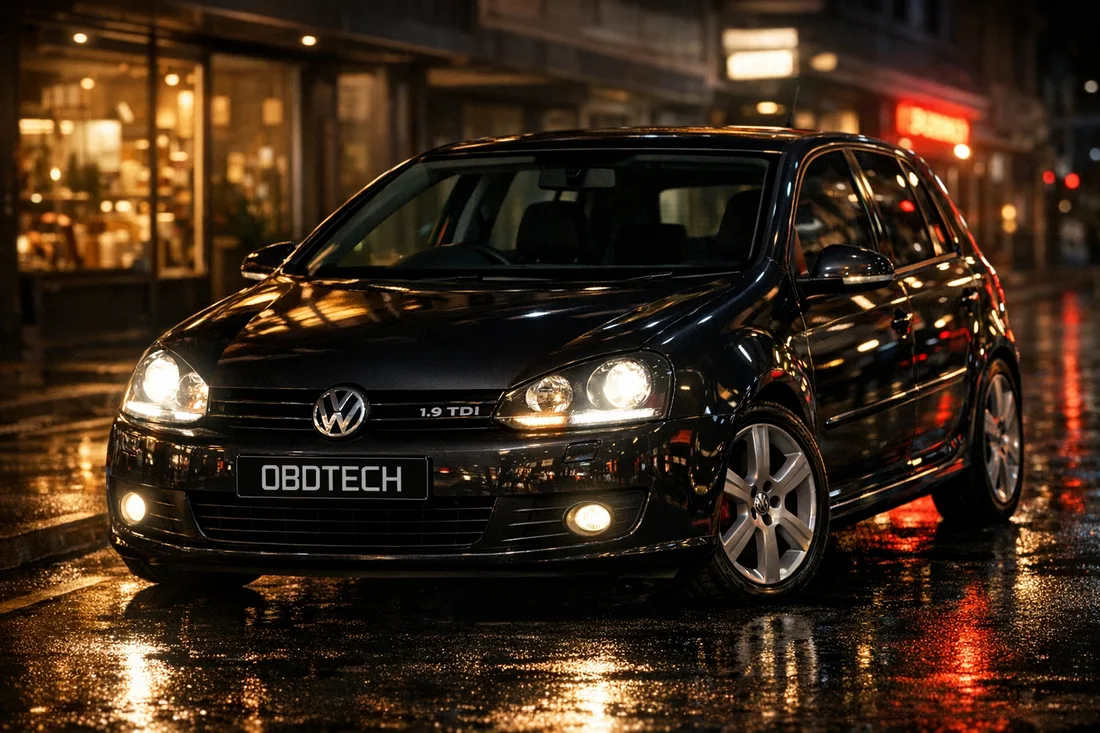
The Mk5 Golf 1.9 TDI with the BKC engine is the one that quietly earned its reputation the hard way, by covering enormous mileages and asking for very little in return. It's a 1896cc pump duse unit, sometimes written PD, which means each injector houses its own high pressure pump driven directly off the camshaft. No common rail, no separate high pressure pump, just a mechanically elegant design that produces 105hp and 250Nm from 1.9 litres. The ECU is one of three Bosch EDC16 variants: the EDC16U1, EDC16U31 or EDC16U34 depending on the build. Compression ratio is 19.0:1, notably higher than the common rail engines that followed, which is part of why the BKC delivers torque so cleanly at low revs.
What makes the BKC durable is also what makes it fussy. The PD injection system runs under very high mechanical loads, and those loads accelerate wear in specific places.
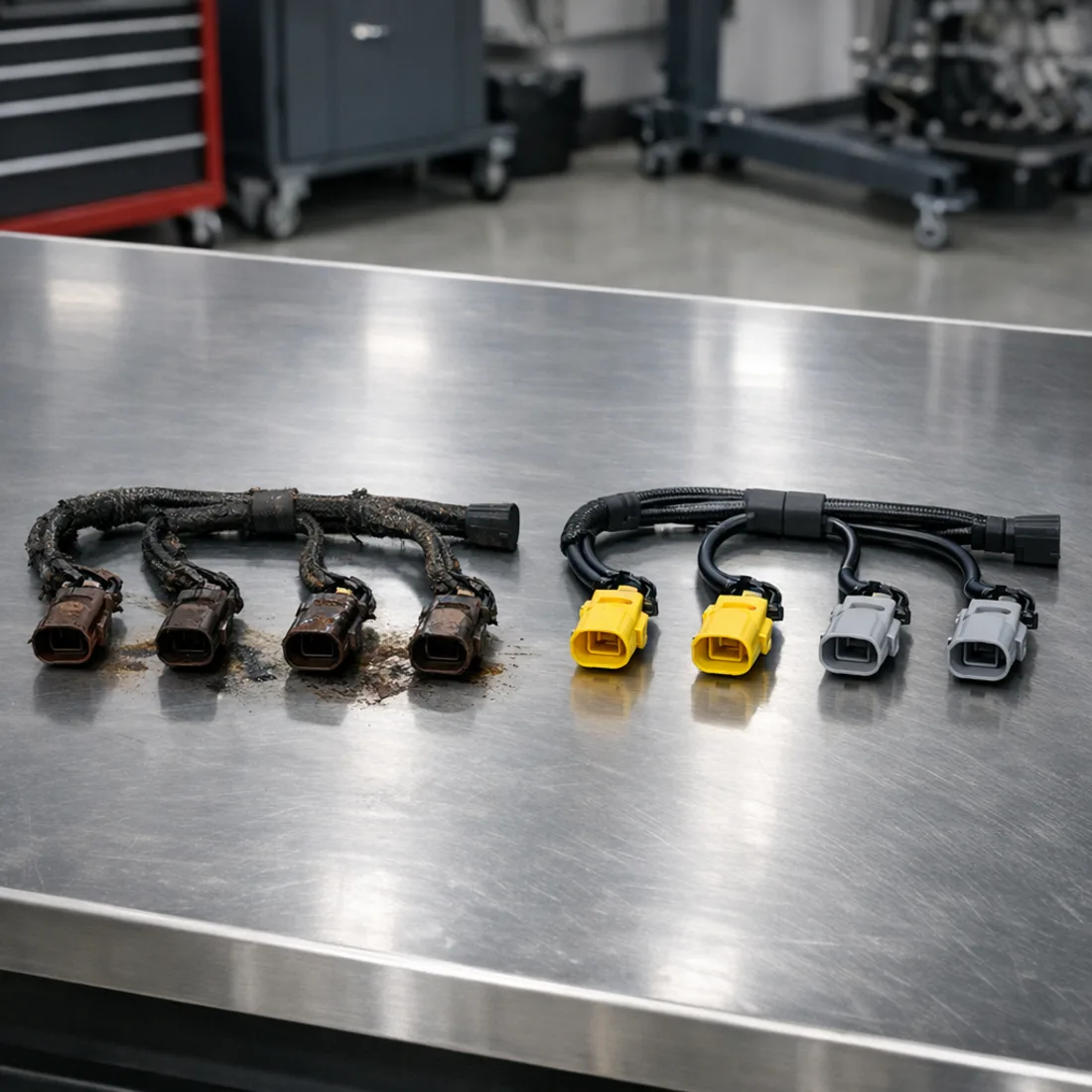
The injector wiring loom is probably the most misdiagnosed fault on this engine. When the insulation breaks down inside the rocker cover, the car can throw a range of injector codes and run like it has a far more expensive problem. We've seen cars come in having had injectors replaced unnecessarily because nobody checked the loom first. Diagnose properly, fix the actual fault, save the owner money. That's the approach.
We diagnose the BKC with the factory VAG platform ODIS rather than a generic scan tool. That matters on a PD engine because ODIS can read live injector contribution data and boost figures the way VW intended. Generic tools just can't go deep enough.
-
Injector wiring loom inside the rocker cover: insulation hardens and cracks, causing rough running, misfires and smoke
-
Camshaft and cam follower wear: the injector spring loads are punishing, and neglected oil intervals accelerate this significantly
-
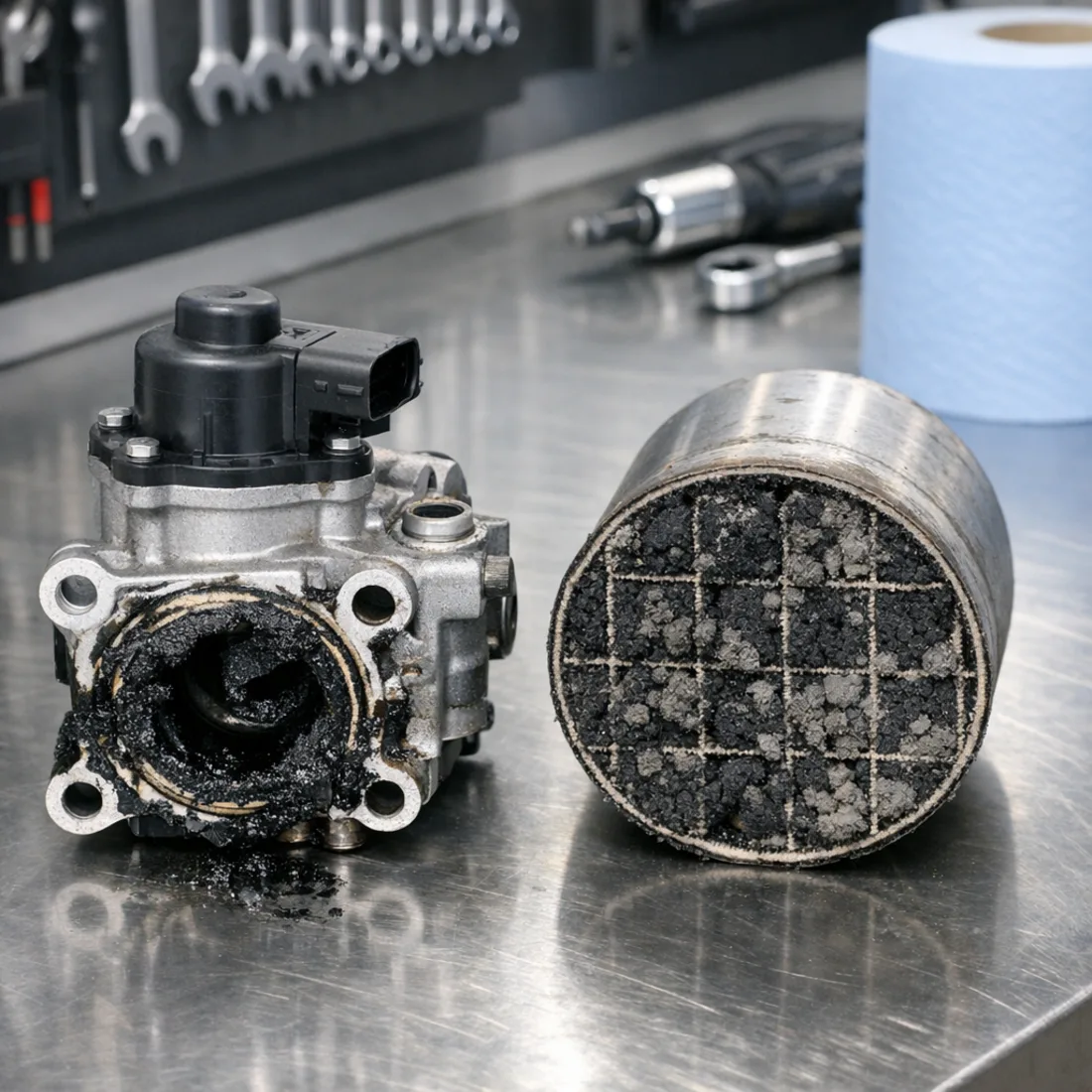
EGR valve and intake manifold clogged with soot and oil, often triggering limp mode
-
Dual mass flywheel and clutch wear, showing up as rattle from cold and judder on take off
-
Turbo and vacuum actuator sticking or weeping on higher mileage cars
-
Cambelt, tensioner and water pump: non negotiable interval, a belt failure here is catastrophic
We've seen cars come in having had injectors replaced unnecessarily because nobody checked the loom first.
Diagnose properly, fix the actual fault, save the owner money.
If you're keeping a high mileage Mk5 running, the service items that really matter are oil and filter on the correct low SAPS diesel grade, fuel filter, air filter, glow plugs for reliable cold starts, and cambelt with water pump on schedule. Beyond that we handle clutch and dual mass flywheel, EGR and turbo work, suspension, and mechanical repairs across the board.
A Stage 1 tune on the BKC lifts output to 140hp and 320Nm, which transforms the way it feels on the open road.
Get your Golf TDI booked in with a workshop that knows all three generations.
Golf GTD 2.0 TDI: The Diesel Hot Hatch That Actually Works
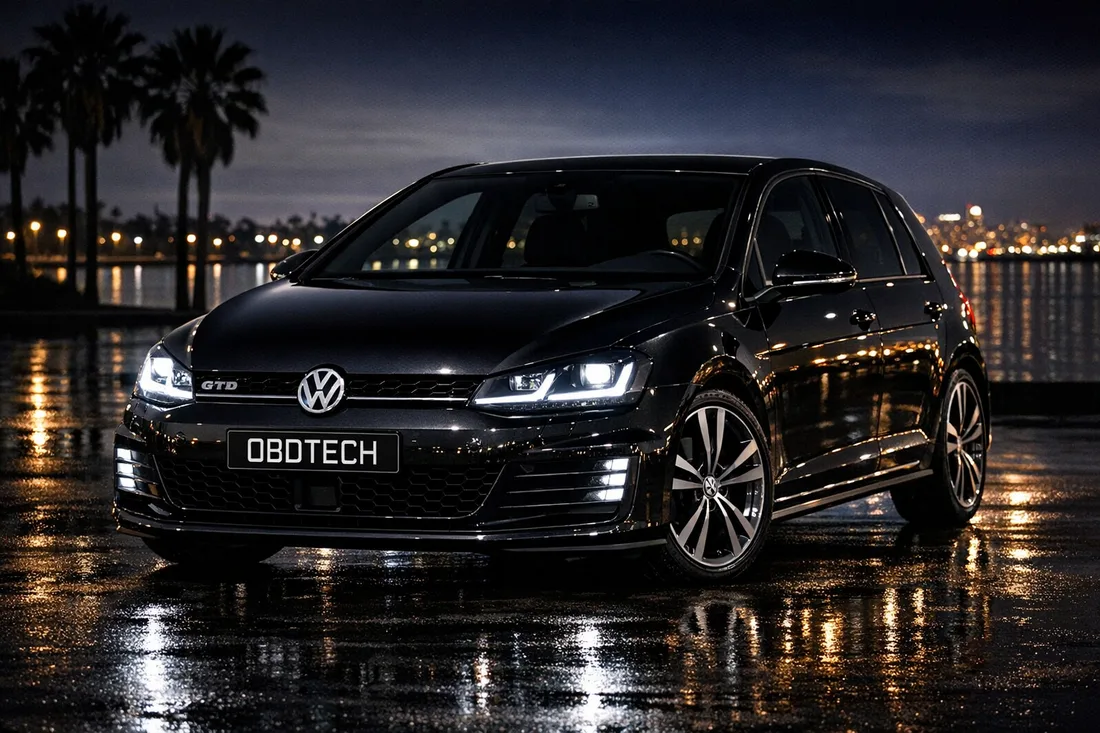
The Golf 7 GTD with engine code DGCA occupies a genuinely strange and brilliant niche. It's the diesel hot hatch that nobody expected to be as good as it is. On paper the move from the Mk5's 1.9 pump duse to the GTD's 2.0 common rail looks like an upgrade in every direction: more displacement, common rail injection, 184hp and 380Nm, and an ECU that's either a Bosch EDC17C64 or EDC17C74. The compression ratio drops to 16.2:1 compared to the BKC's 19.0:1, which is typical for common rail diesels that get their cylinder pressure from injection timing and pressure rather than pure mechanical squeeze. The torque arrives early and stays long, which is exactly why the GTD feels so effortlessly fast in real world driving.
Compared to the Mk5, the GTD fixed the injector loom problem entirely by moving away from PD injection. But it brought its own set of known weaknesses.
The EGR and DPF combination is the biggest source of workshop visits on the GTD. Urban driving and short commutes mean the DPF never gets hot enough to regen properly, carbon accumulates in the EGR circuit, and eventually the car protests loudly. Diagnosis with ODIS lets us read DPF and SCR live data properly, including soot load and AdBlue dosing, which a generic tool simply can't do accurately.
The Stage 1 tune on the DGCA is genuinely impressive: 225hp and 460Nm from a 184hp factory baseline. That's a significant torque gain that makes a car which already felt quick feel properly rapid on New Zealand roads.
-
EGR cooler and EGR valve carboning up, a familiar complaint on the EA288 family
-
DPF regeneration failures on short trip cars, leading to limp mode and warning lights
-
AdBlue SCR system and NOx sensor faults throwing warning lights, especially as the car ages
-
Intake manifold flaps and swirl motors sticking on higher mileage examples
-
Dual mass flywheel and clutch wear: rattle from cold and judder on take off
-
DSG mechatronic service: if it has the DSG gearbox, this can't be skipped
-
Cambelt and water pump: the belt interval must be respected on this engine
The torque gain in particular makes this feel like a different vehicle in real world driving conditions.
225hp and 460Nm from a 184hp factory baseline.
If the GTD has the DSG transmission, the mechatronic unit is worth checking at service time. It's not a wear item most people think about until the gearbox starts slipping or hesitating, but catching it early is far cheaper than dealing with it after the fact. Our team handles gearbox servicing and repairs properly, with the correct VW spec fluid and genuine parts.
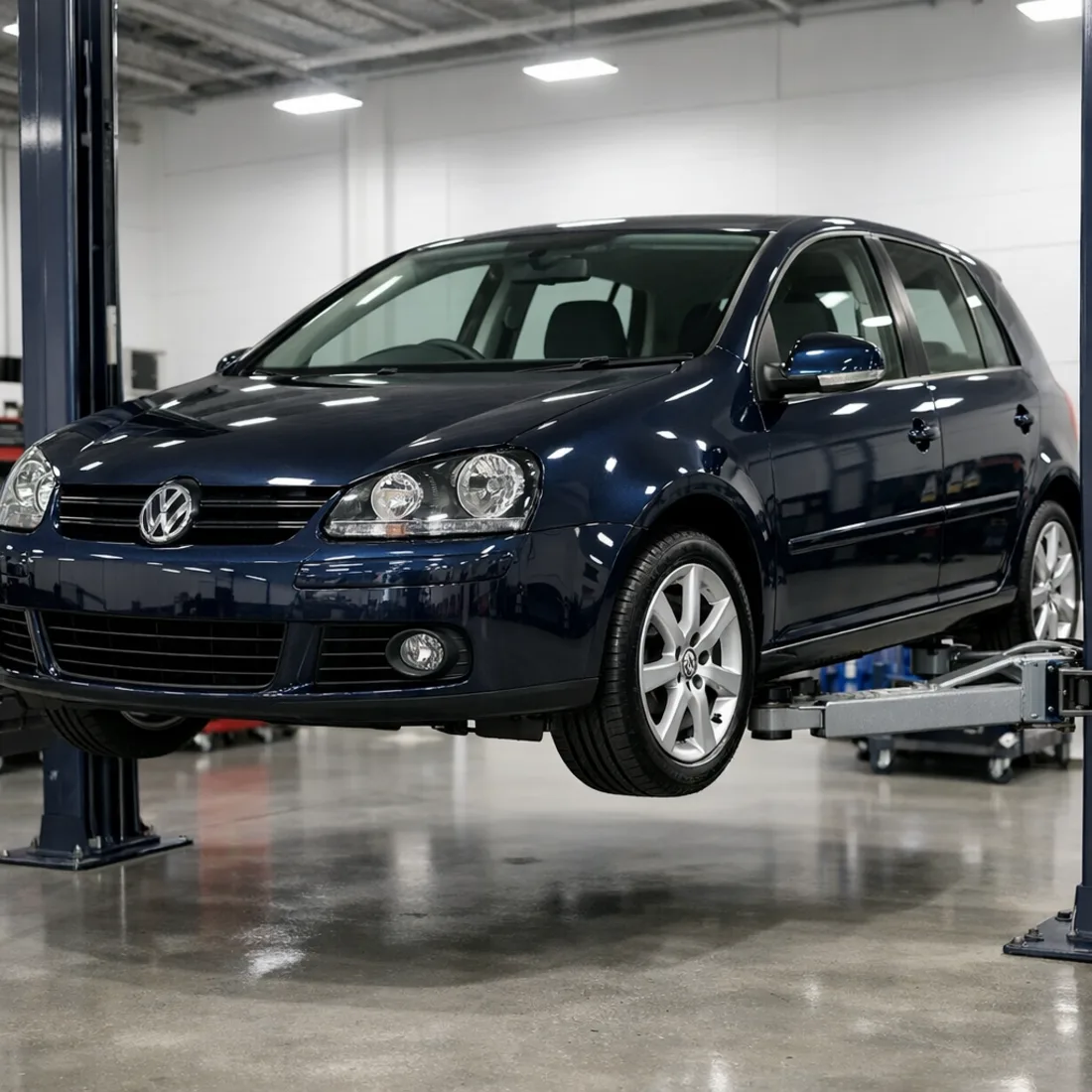
Golf 8 2.0 TDI: The Most Capable and Most Complex
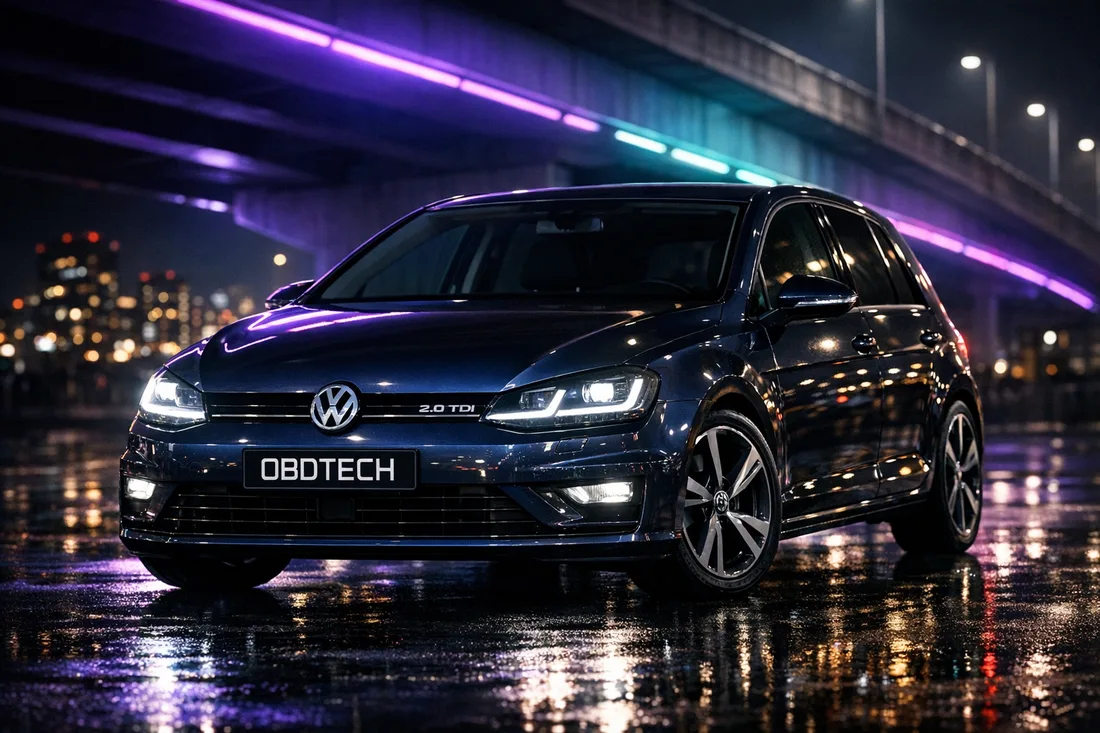
The Golf 8 2.0 TDI is where the Golf diesel story gets genuinely sophisticated. The EA288 evo engine produces 150hp and 360Nm from the same 1968cc, 81.0 by 95.5mm bore and stroke, 16.2:1 compression architecture that the GTD DGCA shares, but the surrounding systems are substantially more advanced. The ECU is now a Bosch MD1CS004, which is a newer, more capable unit than the EDC17 series in the GTD. The emissions architecture steps up to a twin dosing SCR setup with AdBlue, which means two separate points of reagent injection in the exhaust path rather than one. More thorough emissions control, but also more sensors, more actuators, and more places for faults to appear.
The Golf 8 rewards people who look after it properly and punishes those who don't. Many of the complaints we see come down to deferred maintenance or the wrong oil grade.
The twin dosing AdBlue setup is the single biggest step up in complexity from the Golf 7 GTD. Where the GTD has one NOx sensor and one dosing point, the Golf 8 has more. When the system throws a fault, you need ODIS and proper factory access to read it accurately. We use exactly that, which means we can read live AdBlue dosing rates, NOx sensor values and DPF pressure data the way VW intended, not just read the fault code off the top and guess.
The Stage 1 tune on the EA288 evo brings the Golf 8 to 200hp and 430Nm, a genuine 50hp and 70Nm gain over stock. For a 150hp factory car that already feels well sorted, that's a meaningful step up in overtaking ability and motorway composure.
-
Twin dosing SCR and AdBlue system faults: NOx sensor errors and AdBlue metering problems are the most common warning lights on these cars
-
DPF regeneration failures on short trip vehicles, particularly common in urban Auckland use
-
EGR cooler and EGR valve issues, the same family trait carried through from the GTD
-
Timing drive: this is a belt in oil system on certain builds, so correct oil grade and service intervals are not optional
-
Glow plugs and cold start performance as the engine ages
The Golf 8 rewards people who look after it properly and punishes those who don't.
Many of the complaints we see come down to deferred maintenance or the wrong oil grade.
Routine servicing on the Golf 8 means oil and filter to the correct low SAPS long life specification (the wrong oil grade causes real problems with the timing system), air filter, fuel filter, cabin filter, wipers and drive belts. Beyond that we cover glow plugs, DPF and EGR service, AdBlue system health checks, NOx and pressure sensors, brake pads and rotors, and suspension components as they wear.
This is a car with genuine motorway efficiency credentials. The 150hp diesel is well suited to the Auckland to Hamilton run or any regular long distance commute. But it needs the right care to stay that way, and it needs a workshop that can actually communicate with the Bosch MD1CS004 ECU at a factory level.
Shopping Used: Which Golf TDI Generation Is the Sweet Spot?
All three generations make sense as used buys depending on what you need, but they're very different propositions. Here's the honest comparison.
You want the lowest entry price, the simplest technology, and a car genuinely capable of very high mileages if maintained properly. No DPF, no AdBlue, no SCR system to worry about. Check for evidence of regular oil changes with the correct spec, and get the cam and injector loom inspected before buying. It's a superb commuter if the fundamentals are sound.
You want the sweet spot. More power than the Mk5, common rail reliability, and a far more rewarding drive. The EGR and DPF need attention on high mileage or urban use cars, and DSG cars need their transmission history checked. A clean GTD with a known service history is probably the most satisfying Golf diesel you can own in day to day use.
You want the newest and most capable, and you're prepared to maintain it properly. The twin dosing AdBlue system and the belt in oil timing require a workshop that genuinely knows the platform. If it's been serviced properly, it's an excellent car. If service history is patchy, walk away.
- Mk5 BKC: check for regular oil changes at the correct spec and have the cam and injector loom inspected before buying
- GTD DGCA: check EGR and DPF condition on high mileage or urban use cars, and verify transmission history on DSG models
- Golf 8: verify full service history and correct oil specification use; patchy history on this generation is a real risk
- All generations: confirm cambelt replacement has been carried out, or treat it as overdue if not documented
- DSG cars: check for hesitation on take off and jerky low speed shifts as signs of a neglected mechatronic unit
Servicing the Golf TDI Family: What Changes Between Generations
All three generations share certain service fundamentals: engine oil on the correct low SAPS diesel specification, fuel filter, air filter, cabin filter and glow plugs. The oil grade is non negotiable on all of them, and it becomes especially critical on the Golf 8 with its belt in oil timing system. Using the wrong oil doesn't just shorten service life, it can cause real mechanical damage.
Where the generations diverge is in the diesel aftertreatment systems. The Mk5 BKC has no DPF, no AdBlue, a simpler EGR system, and the main maintenance focus beyond oil and cambelt is the EGR valve, the injector loom, and cam condition. The GTD DGCA adds a DPF, EGR cooler and valve, and an AdBlue SCR system, plus DSG fluid and mechatronic condition if it's a DSG car. The Golf 8 EA288 evo adds twin dosing SCR, more NOx sensors, and a more complex AdBlue metering system, with a cambelt in oil on applicable builds demanding strict adherence to interval and correct oil spec.
The cambelt is genuinely critical on both the BKC and the DGCA. On the BKC especially, a missed belt change can mean a destroyed engine with no warning. We always recommend doing the water pump at the same time since it's in the same circuit and the labour is already half done. Our car servicing covers all of this, with genuine and OEM parts throughout.
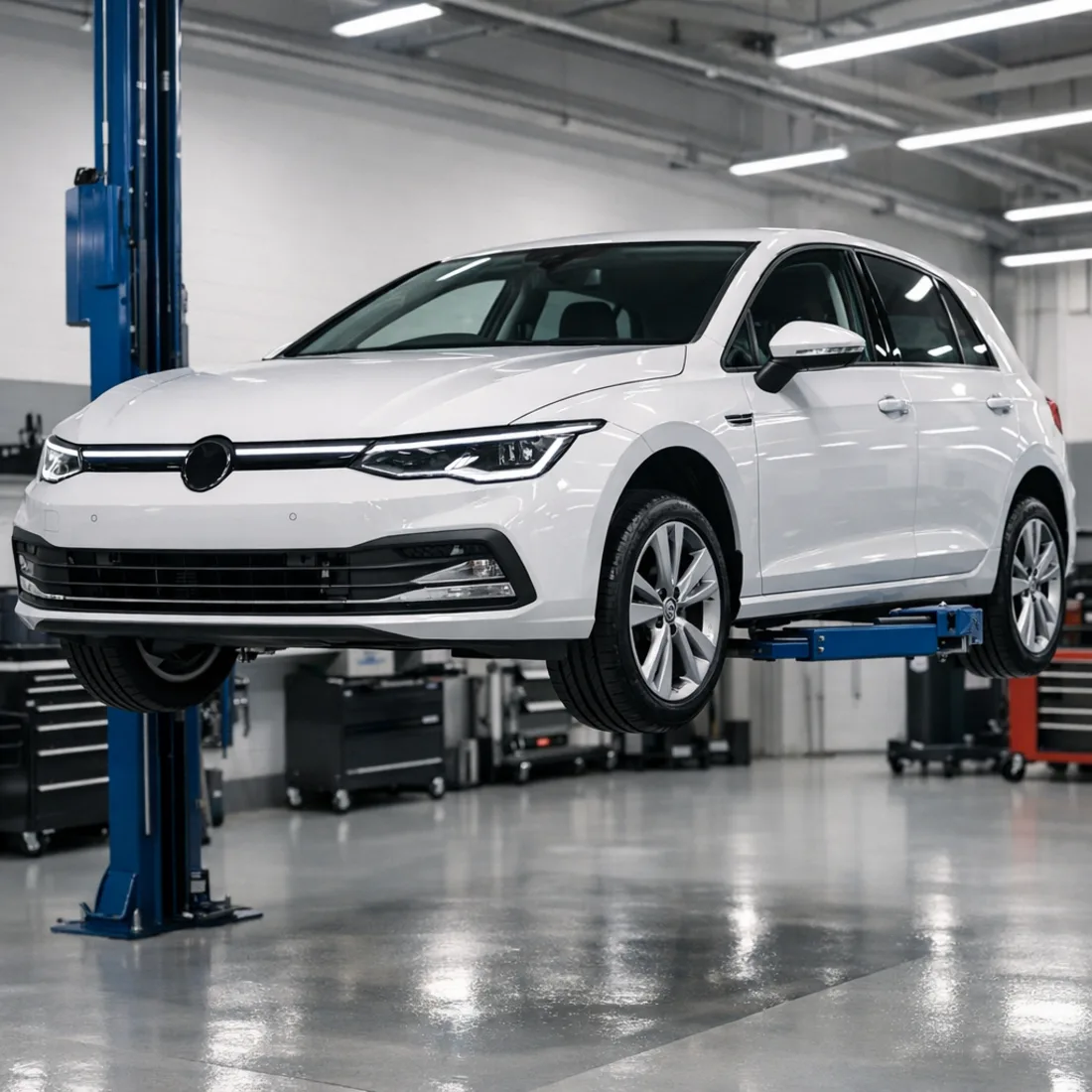
How We Diagnose the Golf TDI: Factory Tools, Not Guesswork
All three Golf TDI generations get diagnosed with the factory VAG platform ODIS. That might seem like a detail but it genuinely isn't. ODIS is what VW technicians use, and it communicates with the ECU at a depth that generic scan tools can't reach.
On the Mk5 BKC, ODIS lets us read live pump duse injector contribution data so we can identify which injector is underperforming before pulling anything apart. On the GTD and Golf 8, it reads DPF soot load, live AdBlue dosing rates and SCR efficiency, NOx sensor values, and DSG adaptation data. It also handles service resets and coding correctly, which matters when you're resetting a DPF service or adapting a new component.
The Bosch ECU family across these three generations spans the EDC16 in the Mk5, the EDC17C64 and EDC17C74 in the GTD, and the MD1CS004 in the Golf 8. Each generation is more capable than the last, and each one needs the right tool and the right knowledge to interpret what it's telling you. We have both.
We also handle programming and coding for component replacements, module updates and adaptation resets, done correctly with factory level access.
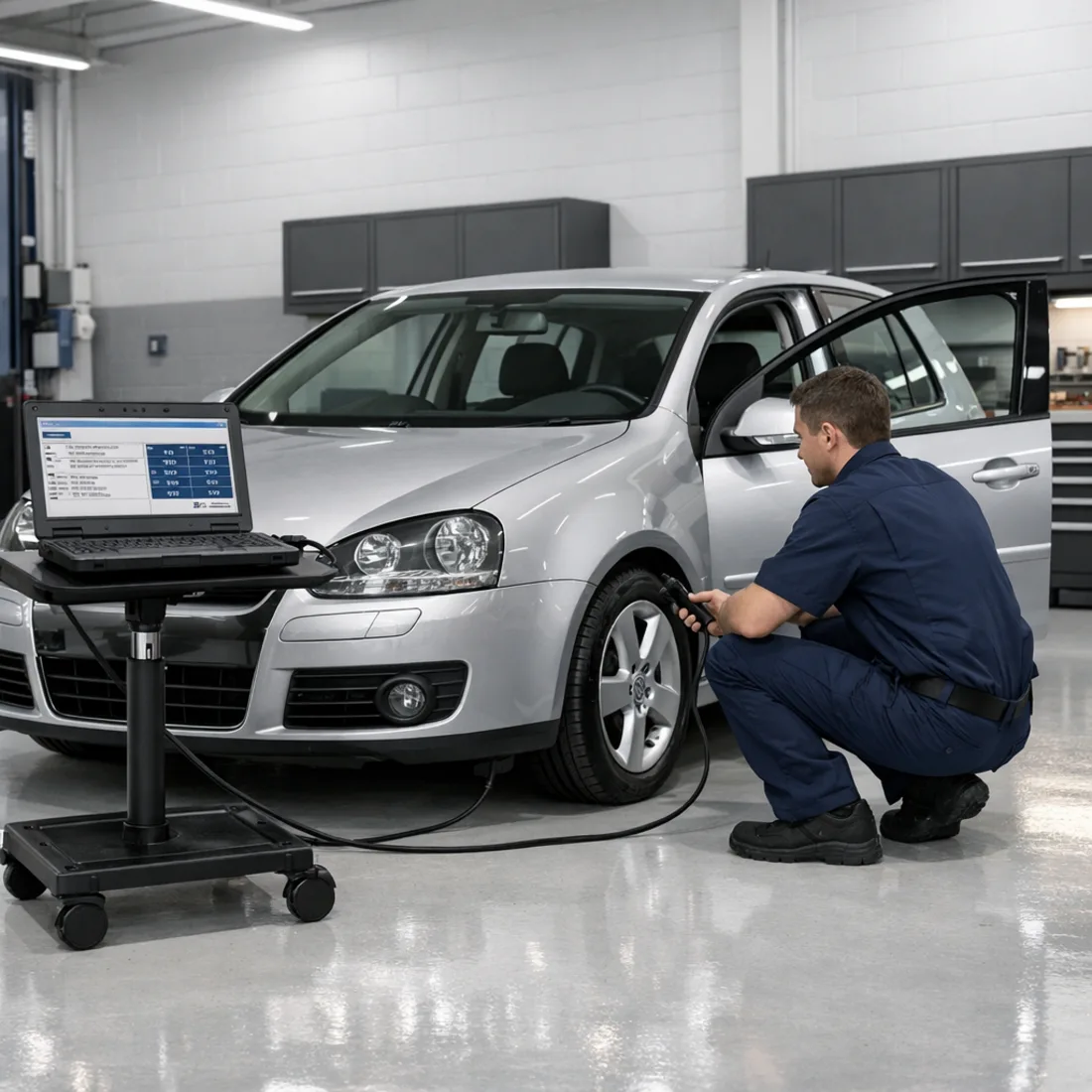
Tuning the Golf TDI Family: Stage 1 Across Three Generations
All three Golf TDI generations respond well to a Stage 1 tune, and the gains are meaningful in each case. All tunes are written specifically for the car's ECU and current condition. We don't apply a generic map and hope for the best. The Mk5 runs Bosch EDC16, the GTD runs EDC17, and the Golf 8 runs the MD1CS004, so each requires a different approach at the ECU level.
A 35hp and 70Nm gain that transforms a car which was always efficient but never quick. It makes the BKC noticeably more relaxed on motorway on ramps and at higher speeds.
A 41hp and 80Nm gain on a car that was already entertaining. The torque gain in particular makes this feel like a different vehicle in real world driving conditions.
The largest power gain of the three. Excellent for anyone doing regular long distance driving who wants more relaxed highway cruising with a strong overtaking reserve.
EGR and DPF diagnosis and cleaning is available as part of the service package where needed, ensuring the engine is in proper condition before any tuning work is carried out. Find out more about our file service options.
Frequently Asked Questions
The questions we get most. Something else on your mind? Get in touch.