Golf TSI and FSI: Mk5 to 7.5, Every Generation
From the Mk5's naturally ambitious 2.0 FSI through to the polished EA211 in the Golf 7.5, the Golf TSI family tells a story of Volkswagen chasing more power from less displacement, and learning a few hard lessons along the way. Carbon build up, timing chain rattle, leaking coolant housings, these themes run like a thread through every generation, even as the engineering gets smarter. If you own any of these Golfs, understanding where your car sits in that story, and what its known weak points are, is the most useful thing you can read before your next service.
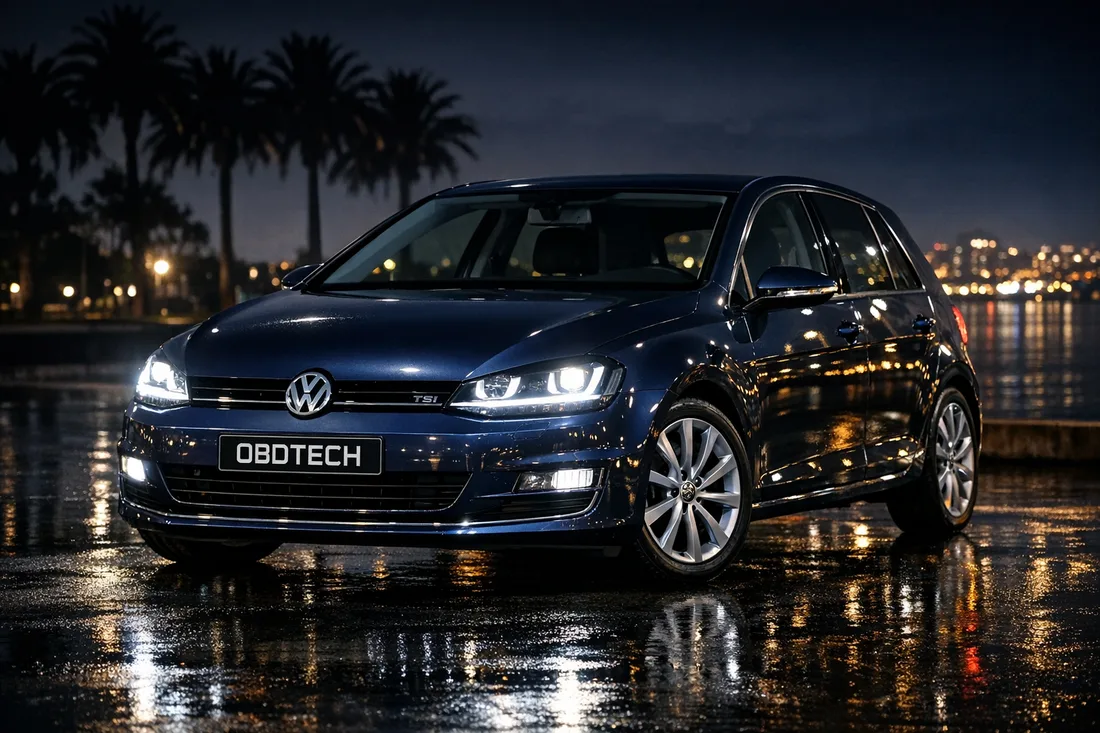
Golf Mk5 2.0 FSI: Where the Direct Injection Story Begins
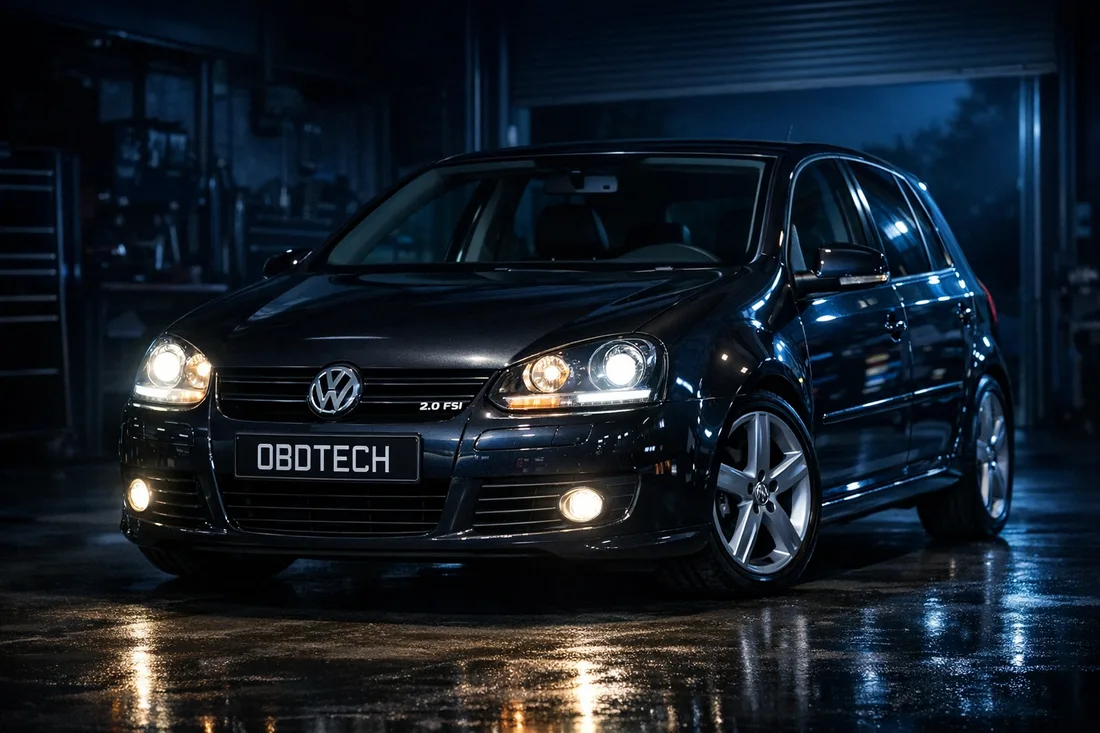
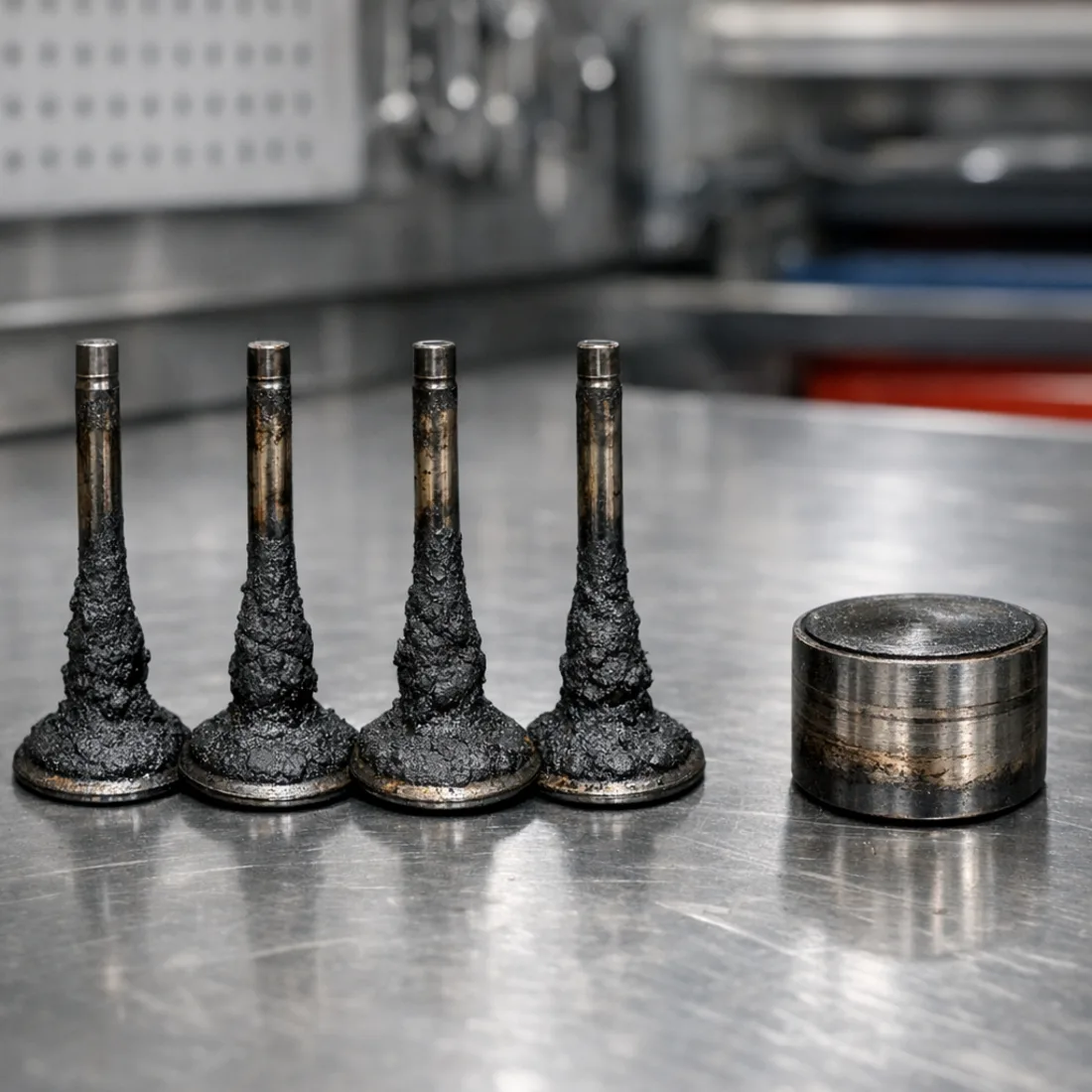
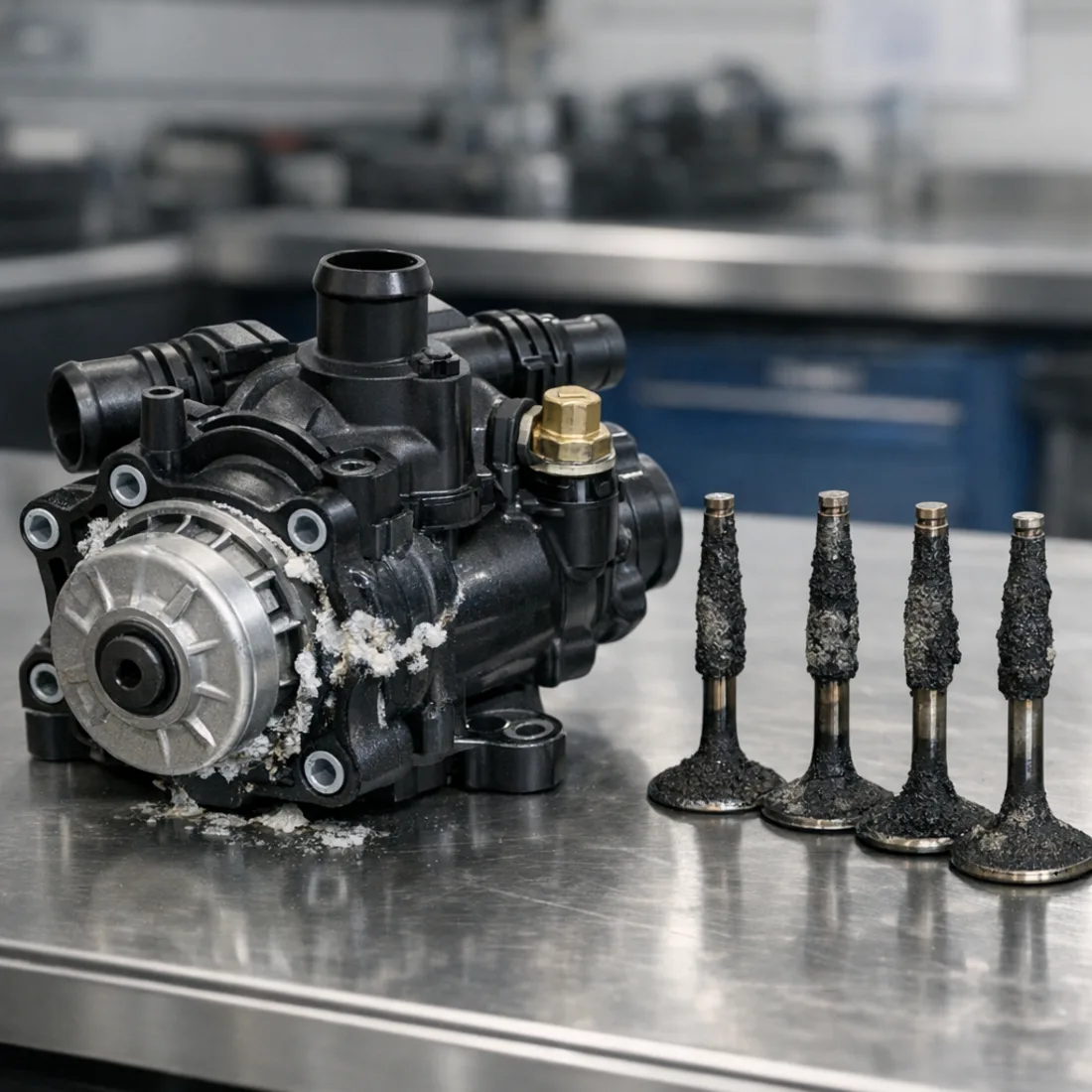
The Mk5 Golf arrived with the BLX 2.0 FSI, a 1984cc four cylinder with an 11.5:1 compression ratio and Bosch MED9.5.10 management putting out 150hp and 200Nm. For its era that was a proper number, and direct injection felt genuinely cutting edge. The problem is that direct injection sprays fuel directly into the cylinder, meaning the intake valves never get the fuel wash that port injection provided. Carbon bakes onto the back of the valves and builds up over the years. On a Mk5 that's done real kilometres, you'll often see rough idle, hesitation under light throttle and misfires that don't obviously point to coil packs.
Speaking of coil packs: they're a very common fault on the BLX. Spark plugs too. Both are cheap to renew and should be done on schedule, not when a cylinder drops out. The other Mk5-specific thing to watch closely is the high pressure fuel pump and its cam follower. The follower wears quietly and, if ignored, it starts to score the camshaft itself. That turns a forty dollar part into a very expensive repair. Any Mk5 FSI coming into our workshop gets the follower inspected, no exceptions.
The BLX uses a chain for timing, so a cold start rattle is worth taking seriously. A healthy engine should be quiet within a second or two. If it chatters for longer, the tensioner wants attention before the chain does any damage.
-
Heavy carbon build up on intake valves, causing rough idle and misfires
-
High pressure fuel pump cam follower wear, risks camshaft scoring
-
Coil pack and spark plug failures
-
Timing chain tensioner rattle on cold start
-
MAF and cam sensor faults
The follower wears quietly and, if ignored, it starts to score the camshaft itself.
That turns a forty dollar part into a very expensive repair.
Stage 1 tuning on the BLX takes it from 150hp and 200Nm to 165hp and 215Nm. The gains are modest compared to later turbocharged units, but the car already feels responsive, so even a conservative tune sharpens it up noticeably.
Get your Golf booked in with a proper specialist.
Golf Mk6 1.4 TSI CAXA: Same Habits, Smaller Package
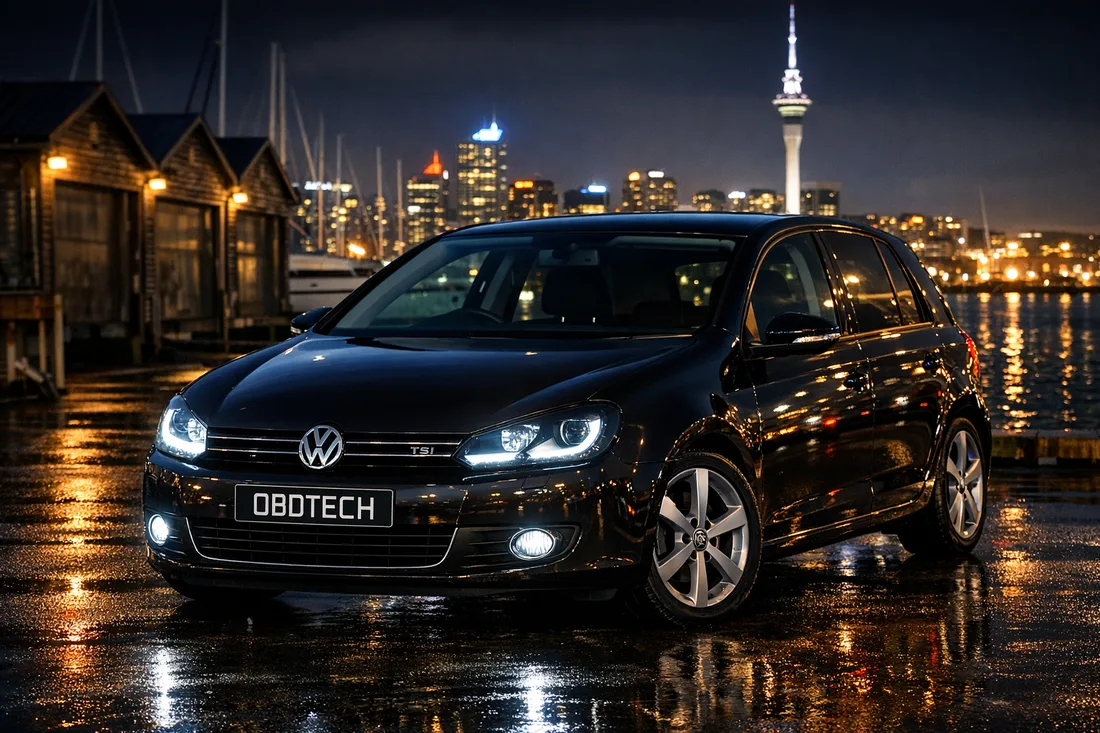
The Mk6 moved to the EA111 1.4 TSI with the CAXA engine code. Displacement dropped to 1390cc, compression ratio stayed at 10.0:1, and Volkswagen squeezed 122hp and 200Nm from a much smaller package. The ECU is Bosch MED17.5.20 or MED17.5.5 depending on build date. If you're coming from a Mk5 FSI, the CAXA feels lively in a different way, turbo torque rather than high compression pull.
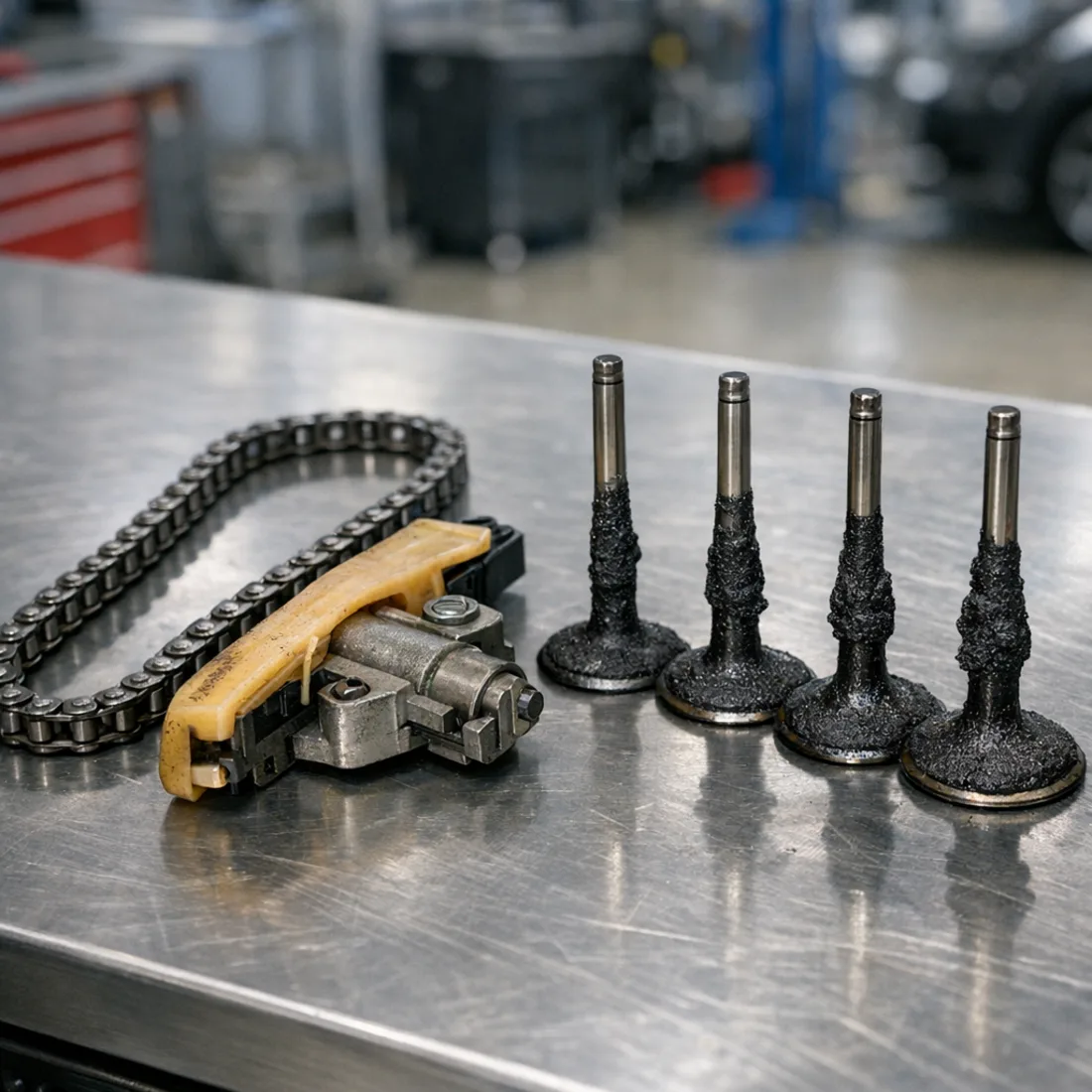
The carbon intake valve problem didn't go away with the switch to a smaller engine. The CAXA is still direct injection, so the intake valves still coke up over time. We see exactly the same rough idle and partial misfires as on the Mk5, just in a newer body. What's different is the timing arrangement: the CAXA also uses a chain, and the tensioner and chain stretch is a well documented issue on higher mileage examples. A cold start rattle on a CAXA is not one to dismiss. We've seen engines where owners waited too long and turned what should have been a chain and tensioner job into something far more involved.
The plastic thermostat housing and water pump are coolant leak points on this engine, carrying forward from the Mk5 era. Ignition coils and plugs cause misfires just like on the BLX. The CAXA is a rewarding engine when it's maintained properly, but it does not quietly tolerate neglect.
-
Timing chain and tensioner stretch, listen for cold start rattle
-
Carbon build up on intake valves
-
Plastic thermostat housing and water pump coolant leaks
-
Ignition coil and spark plug misfires
A cold start rattle on a CAXA is not one to dismiss.
We've seen engines where owners waited too long and turned what should have been a chain and tensioner job into something far more involved.
Stage 1 on the CAXA lifts it to 150hp and 265Nm, gains of 28hp and 65Nm over stock. That extra torque in the mid range transforms how the car feels on the road. We use the factory ODIS platform for all diagnostics and post tune coding, not a generic scan tool, so adaptations are done correctly.
Golf 6 1.2 TSI CBZA: Small Engine, Big Personality
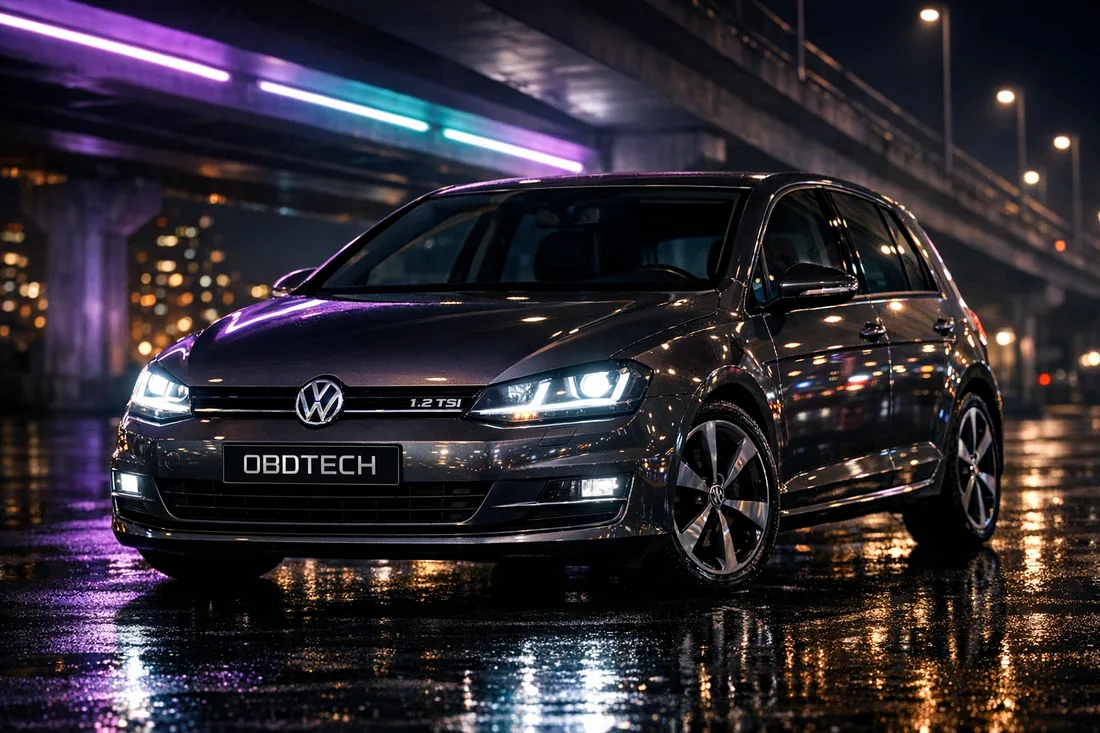
Running alongside the 1.4 TSI in the Golf 6 lineup was the CBZA 1.2 TSI. At 1197cc, a 10.0:1 compression ratio and 85hp with 160Nm, this was Volkswagen's efficiency first option. The ECU is Bosch MED17.5.21 or Siemens Simos 10. It's a popular used buy because the purchase price is lower, and on paper the running costs look attractive. In practice, the CBZA has its own set of known issues that are worth understanding before you hand over cash.
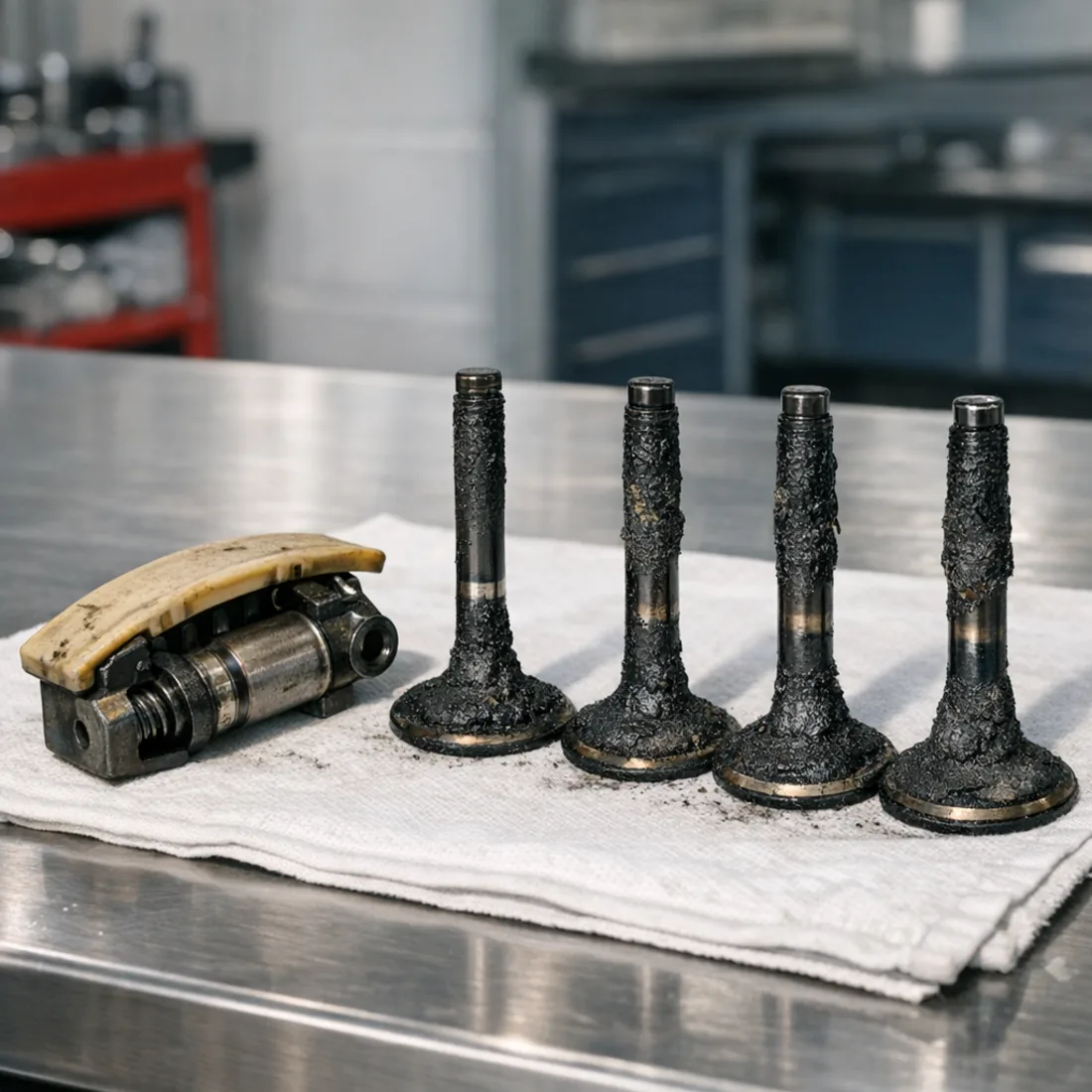
The timing chain and tensioner wear on the CBZA is arguably more pronounced than on the CAXA. We hear about this one a lot. A rattle on cold start that clears within a second is one thing. A rattle that lingers is a genuine warning. The chain can stretch enough to affect timing before it actually snaps, causing poor running and misfires that look like ignition faults until you dig deeper. If you're buying a used Golf 6 1.2 TSI, a cold start assessment before purchase is not optional.
Carbon build up on the intake valves is present here too, for the same direct injection reason as every other engine in this family. The plastic thermostat housing and water pump leak coolant. The PCV valve in the cam cover fails and causes blow by and rough running. Coils and plugs are consumables that need to stay on schedule.
-
Timing chain and tensioner wear, cold start rattle is the tell
-
Carbon build up on intake valves
-
PCV valve failure in the cam cover
-
Thermostat housing and water pump coolant leaks
-
Ignition coil and spark plug failures
The timing chain and tensioner wear on the CBZA is arguably more pronounced than on the CAXA.
If you're buying a used Golf 6 1.2 TSI, a cold start assessment before purchase is not optional.
Stage 1 on the CBZA is genuinely transformative: 140hp and 225Nm from a stock 85hp and 160Nm. Those are gains of 55hp and 65Nm, which is a remarkable number for a 1.2-litre engine. The car becomes a completely different drive. That said, we'd always recommend sorting any timing chain concerns before tuning, not after.
Golf 7 1.4 TSI CZCA: The EA211 Era Begins
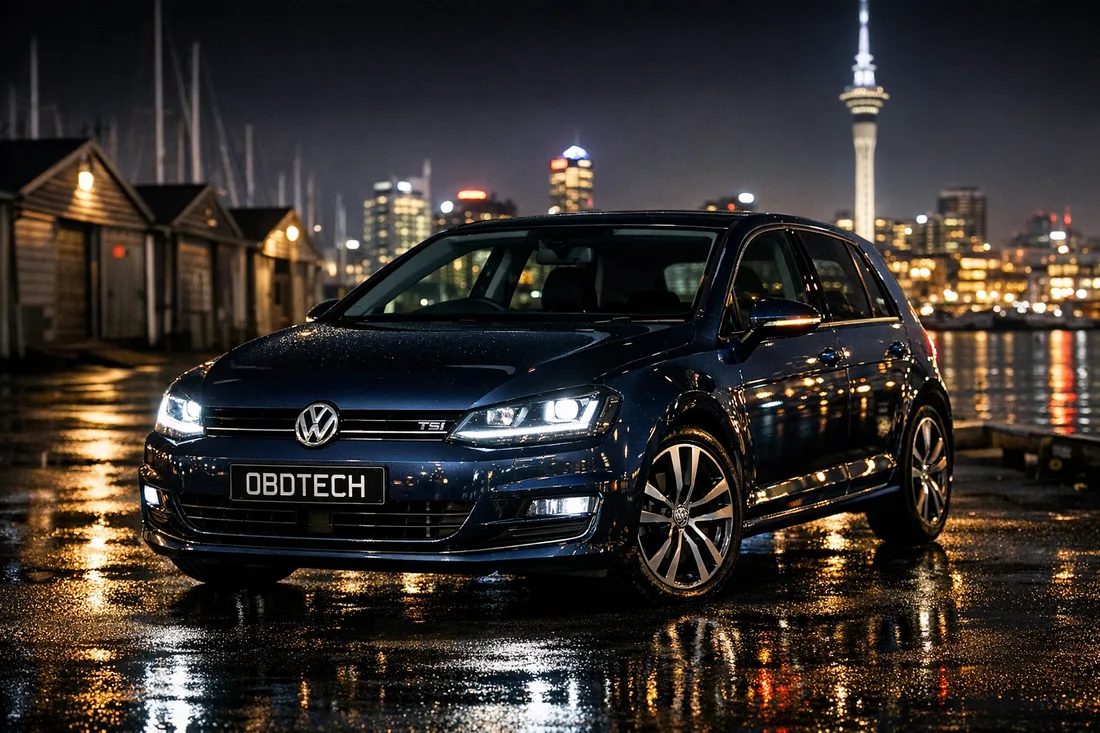
The Golf 7 was a proper step change. Lighter, stiffer, and with the new EA211 engine family under the bonnet. The CZCA 1.4 TSI runs 1395cc, a 10.5:1 compression ratio and a 74.5 x 80.0mm bore stroke setup producing 125hp and 200Nm. The ECU options are Bosch MED17.1.27, MED17.5.25 or MG1CS011, and where the DSG is fitted it runs a Siemens/Continental DQ200 Gen2 gearbox controller. This combination is genuinely refined: the power delivery is smoother, the gearbox (when healthy) is slicker, and the car feels more planted than either the Mk5 or Mk6.
The good news is that the EA211 largely sorted the timing chain anxiety of the EA111 family. The CZCA is cambelt driven, which means the timing chain rattle concern you had on the Mk6 CAXA is gone, replaced instead by a scheduled cambelt service that needs to be planned and budgeted for. Cambelt, tensioner and water pump should be done as a set.
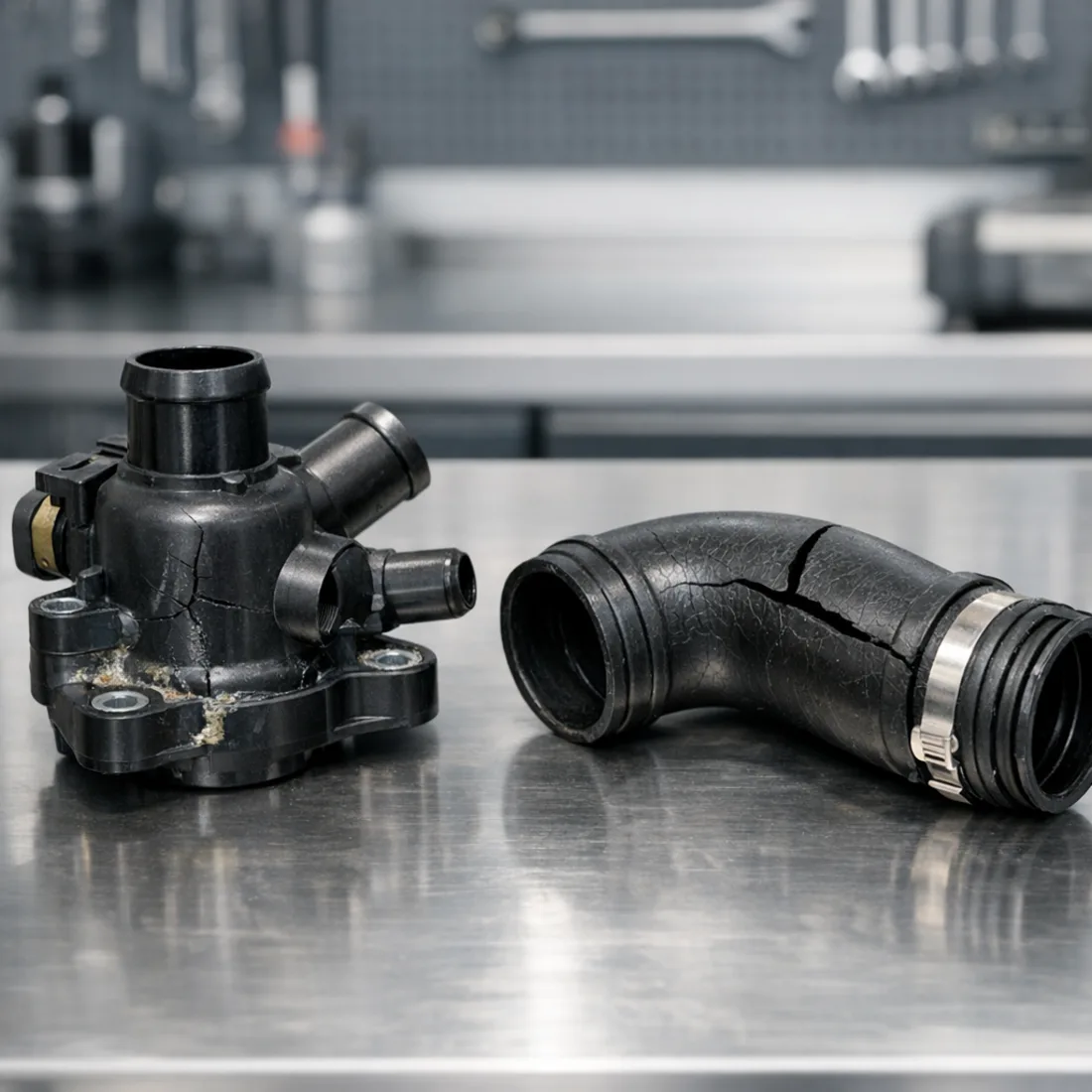
What didn't disappear is the water pump and thermostat housing trouble. We see these leaking on the Golf 7 regularly. The plastic charge pipe and PCV components can crack and cause boost or vacuum leaks, which often show up as hesitation and stored boost related fault codes. Carbon build up is reduced compared to the older engines but not eliminated. Ignition coils and plugs still cause misfires as they age.
-
Water pump and thermostat housing coolant leaks
-
Plastic charge pipe and PCV cracking, boost or vacuum leaks
-
Carbon build up on intake valves at higher mileage
-
Ignition coil and spark plug misfires
-
Cambelt, tensioner and water pump service due on schedule
That 70Nm torque gain is the one you feel every day.
The car pulls cleanly and confidently from low revs in a way stock simply doesn't manage.
Stage 1 on the CZCA takes it to 155hp and 270Nm, gains of 30hp and 70Nm. That 70Nm torque gain is the one you feel every day: the car pulls cleanly and confidently from low revs in a way stock simply doesn't manage.
Golf 7.5 1.4 TSI EA211: The Refined Endpoint
The 7.5 facelift carried the EA211 1.4 TSI forward with minimal mechanical changes. Power stays at 125hp and 200Nm, and the ECU options are Bosch MED17.5.25 and MG1CS011 with the Temic DQ200 Gen2 gearbox controller where the DSG is fitted. Visually the 7.5 is sharper, but under the bonnet it's essentially the same EA211 philosophy as the Golf 7, just with refined calibration and minor updates.
That means the same weak points apply. The water pump and thermostat housing are still potential coolant leak sources. Carbon build up still develops over high mileage on these direct injection units. Ignition coils and spark plugs remain routine wear items. And because the engine family inherited some timing component concerns early on, we always listen for cold start rattle as a precaution, even on the later 7.5 examples.
The 7.5 is the most sorted of the group. The calibration is tighter, the DSG second generation controller is more mature, and the overall package is the closest Volkswagen got to getting everything right in this generation. If you're shopping used and reliability is the priority, the 7.5 with documented service history is the pick of the family.
Stage 1 tuning on the 7.5 mirrors the Golf 7: 155hp and 270Nm, the same gains of 30hp and 70Nm. The ECU options are well supported and the tune lands cleanly on a properly serviced car. We handle all diagnostics with ODIS, reading all modules and performing guided functions and coding adaptations correctly, not with a generic reader that only scratches the surface.
-
Water pump and thermostat housing coolant leaks
-
Carbon build up on intake valves at higher mileage
-
Ignition coils and spark plugs, routine wear items
-
Cold start rattle check as a precaution, even on 7.5 examples
The 7.5 is the most sorted of the group.
If you're shopping used and reliability is the priority, the 7.5 with documented service history is the pick of the family.
Stage 1 tuning on the 7.5 mirrors the Golf 7: 155hp and 270Nm, the same gains of 30hp and 70Nm. The ECU options are well supported and the tune lands cleanly on a properly serviced car.
How to Pick Between Them: Buying Advice Across the Generations
Every one of these Golfs is a good car when it's in good shape. The generation that makes sense for you depends on what you're buying it for and what you're prepared to maintain.
You want the most factory power at 150hp and you're prepared to maintain it properly. Buy only with documented service history and get the cam follower inspected immediately. It rewards that effort, but it punishes neglect faster than any of the others.
You want a capable, tuneable car at a lower entry price. The timing chain concern is real but manageable if you buy carefully. A cold start assessment, a compression check and an ODIS scan before purchase tells you most of what you need to know. A clean CAXA with a fresh chain and tensioner is an excellent car.
You're after the budget pick and you don't mind doing your due diligence. Don't buy one without hearing it start cold. A rattle that doesn't clear immediately is a negotiating tool at minimum, and a reason to walk away at worst. A healthy CBZA with the chain sorted is efficient, cheap to run and, with a Stage 1 tune, genuinely quick.
You want the most refined and least stressful ownership. The shift to a cambelt removes the chain anxiety, though it introduces a scheduled service cost instead. A 7 or 7.5 with a recent cambelt service done is the pick for lowest long term drama. The 7.5 is the most polished version of the formula.
- Cold start assessment before purchase on all EA111 engines (CAXA, CBZA)
- Compression check and ODIS scan on any used Mk6
- Cam follower inspection on any Mk5 2.0 FSI BLX
- Cambelt service history confirmed on Golf 7 CZCA and 7.5 EA211
- DSG fluid and service history checked on all DQ200-equipped cars
- Coolant system inspected for thermostat housing and water pump weeps across all generations
Servicing the Golf TSI Family: What Changes and What Doesn't
Across all five of these engines, a few service principles stay constant. Oil grade matters. These are precision turbocharged engines and the correct low viscosity VW specification oil is not optional. Using the wrong grade accelerates timing component wear and affects turbo longevity. Each generation has its own spec, and we always use the right one for the car on the hoist.
Spark plugs and ignition coils are consumables across the whole family. Misfires are one of the most common reasons these cars come in, and in many cases the fix is plugs and coils on schedule rather than a complex diagnosis. We fit genuine OEM parts every time, not aftermarket equivalents that might save a few dollars upfront but don't last.
The coolant system is a recurring theme. Thermostat housings and water pumps across the EA111 and EA211 families are plastic heavy designs that develop leaks as they age. Catching a small weep early is far cheaper than dealing with an overheating event. Any service on these cars includes a coolant system check.
For DSG equipped cars across the Golf 7 and 7.5, the DQ200 dual clutch gearbox needs its own fluid service on schedule. It's a common item that gets skipped on used cars and shows up as harsh engagement or hesitation. Our gearbox servicing and repair covers this properly, including the correct fluid, adaptations and any fault code investigation.
Diagnostics: Why ODIS Matters on These Cars
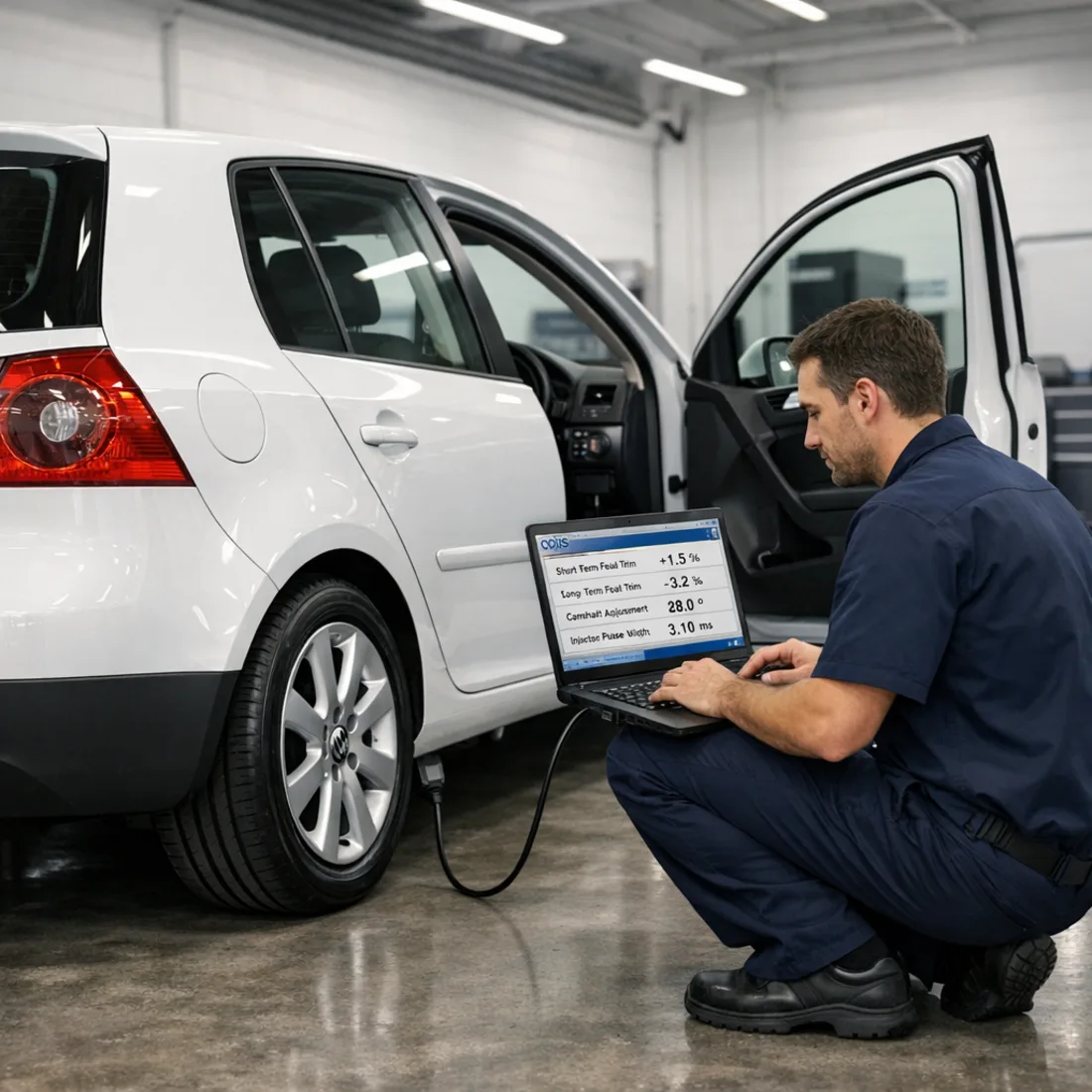
Every generation in this lineup, from the Mk5 BLX through to the 7.5 EA211, gets diagnosed with ODIS, the factory Volkswagen diagnostic platform. This isn't a preference thing, it's a capability thing. Generic scan tools read generic fault codes. ODIS reads every module in the car, including the gearbox controller, the instrument cluster, the air conditioning module and the body electronics, not just the engine ECU. It also runs guided fault finding routines that walk through tests in the correct sequence, and it handles adaptations and coding when parts are replaced.
When a thermostat housing is replaced on a Golf 7, the ECU needs to relearn coolant temperature parameters. When coil packs or sensors are swapped on a Mk6, adaptations need resetting. When a new key needs coding on any of these cars, ODIS is the tool that does it correctly. Our auto electrical team uses ODIS for all electrical fault finding and component coding across the Golf range.
The difference between a proper ODIS diagnosis and a generic code read shows up most clearly on intermittent faults, the kind that don't throw obvious codes but cause rough running, hesitation or warning lights that come and go. We've fixed Golfs that other workshops couldn't sort simply because we could see what the full system was telling us.
Tuning Across the Golf TSI Family
Every engine in this lineup has a Stage 1 tune available. The gains vary by generation, and understanding what each one actually delivers helps set realistic expectations.
The BLX tune is more conservative, but the car is already producing meaningful power from the factory, so even a modest sharpening makes a noticeable difference. Available extras: DTC Removal, Pop and Bang Crackle map, DECAT, FLAPS, Vmax, Anti lag.
The CAXA and the EA211 deliver the most satisfying real world result because the torque gains land squarely in the rev range you use every day. Available extras: DTC Removal, Pop and Bang Crackle map, START/STOP OFF, DECAT, FLAPS, Vmax.
The CBZA Stage 1 is the most dramatic percentage gain: 55hp is a huge lift for a 1.2-litre engine. A sorted CBZA with a Stage 1 tune is genuinely quick and efficient. Available extras: DTC Removal, Pop and Bang Crackle map, START/STOP OFF, DECAT, FLAPS, Vmax.
That 70Nm torque gain is the one you feel every day: the car pulls cleanly and confidently from low revs in a way stock simply doesn't manage. Available extras: DTC Removal, Pop and Bang Crackle map, START/STOP OFF, DECAT, FLAPS, Vmax.
The ECU options are well supported and the tune lands cleanly on a properly serviced car. Available extras: DTC Removal, Pop and Bang Crackle map, START/STOP OFF, DECAT, FLAPS, Vmax.
All tuning is done on a properly serviced, mechanically sound car. We won't tune an engine with known timing chain wear, a coolant leak or failing coil packs. The tune has to land on a solid foundation to perform and to last. Our tuning page covers what's involved and what to expect from the process.
Frequently Asked Questions
The questions we get most. Something else on your mind? Get in touch.